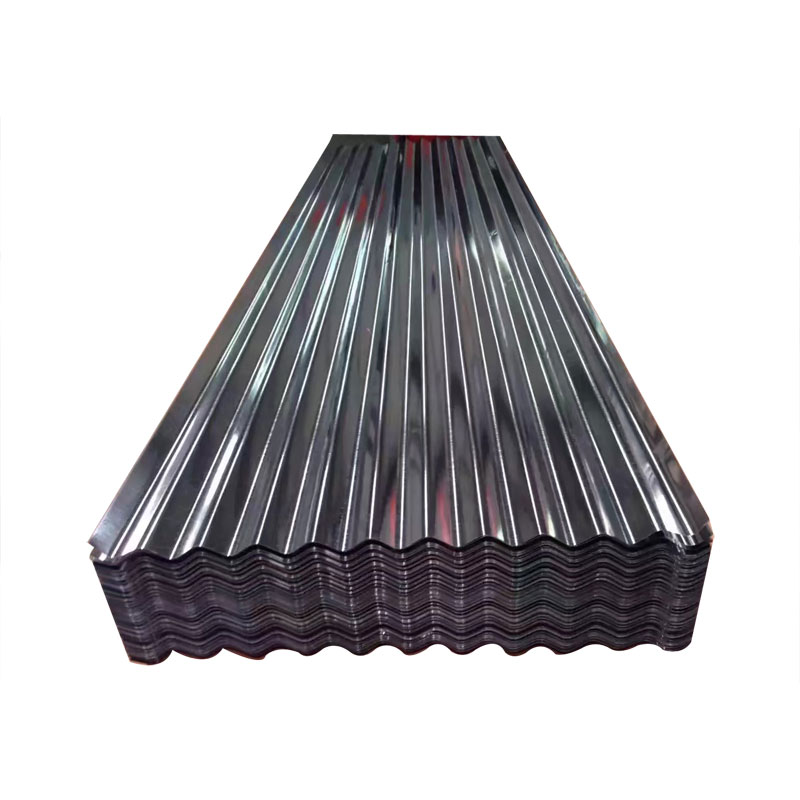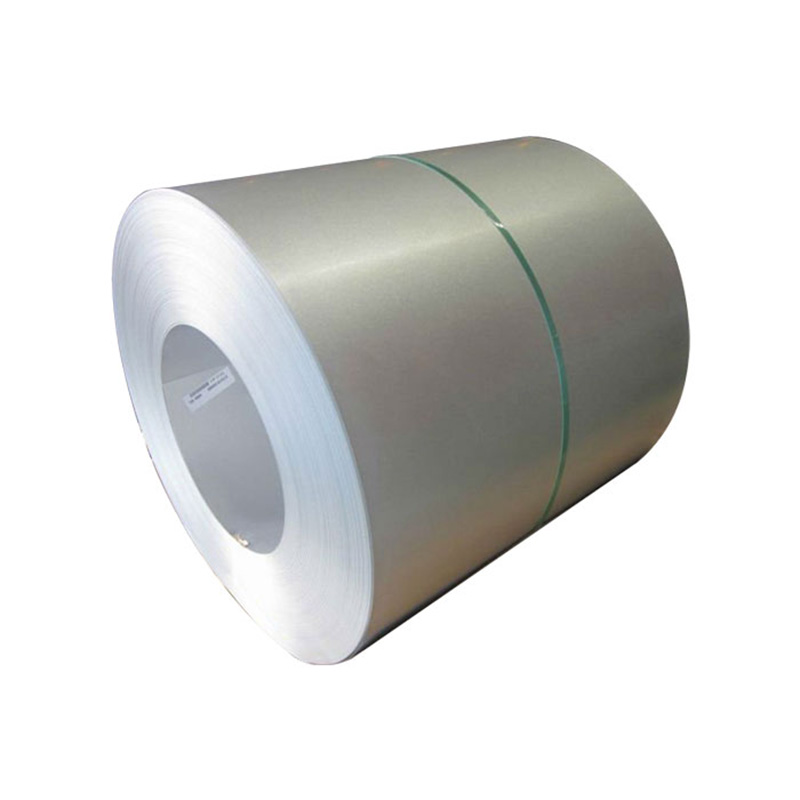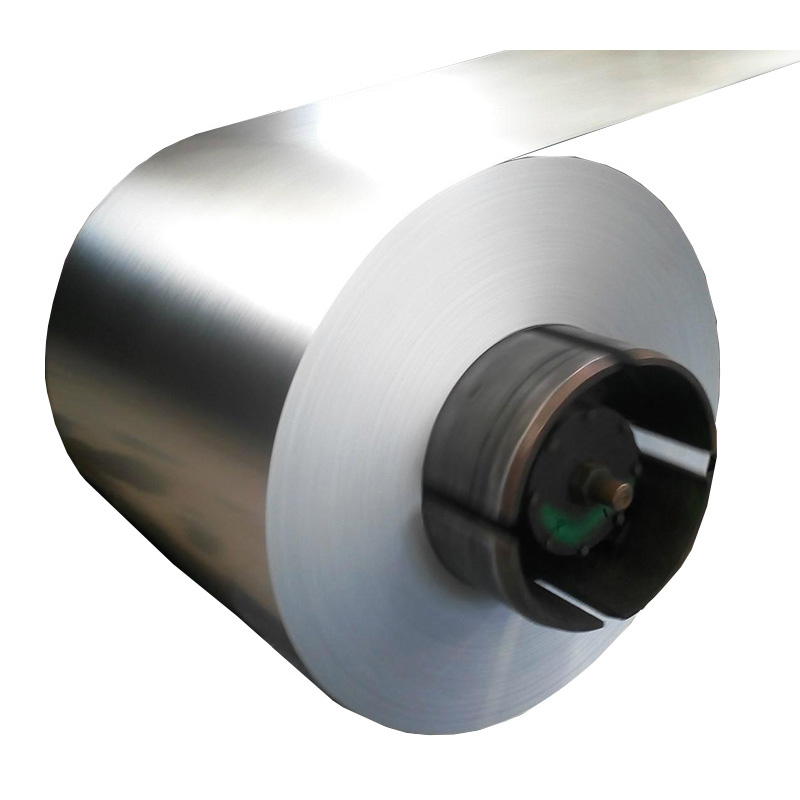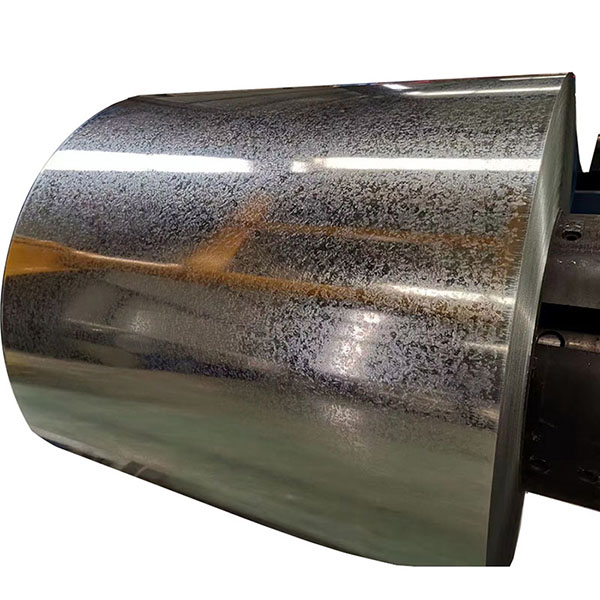
If you want to keep your steel coil storage safe, you must focus on Managing Steel Coil Inventory Risks. You need to watch for common risks like moisture, temperature changes, and UV exposure.
| Risk Type | Description | Impact on Steel Coils |
|---|---|---|
| Moisture | Water between coil laps can cause corrosion and paint breakdown. | Compromises structural integrity and visual appearance. |
| Temperature Fluctuations | Rapid changes can cause condensation on coils. | Increases risk of corrosion and material degradation. |
| UV Exposure | Sunlight can degrade protective films. | Reduces effectiveness of coatings and finishes. |
You should use inventory management systems, set up designated storage areas, and rely on technology for real-time tracking. Safe handling matters as well. Make sure you train staff, follow stacking procedures, and check equipment often. These steps help reduce accidents and protect your materials.
Key Takeaways
- Monitor moisture, temperature, and UV exposure to protect steel coils from damage.
- Implement inventory management systems for accurate tracking and organization of coils.
- Use designated storage areas to reduce accidents and improve safety.
- Train staff regularly on safe handling practices and emergency procedures.
- Utilize technology for real-time tracking and automated stock rotation to enhance efficiency.
- Ensure proper airflow and humidity control in storage areas to prevent corrosion.
- Follow OSHA and fire safety regulations to maintain a safe storage environment.
- Conduct regular inspections and audits to identify and address potential hazards.
Managing Steel Coil Inventory Risks
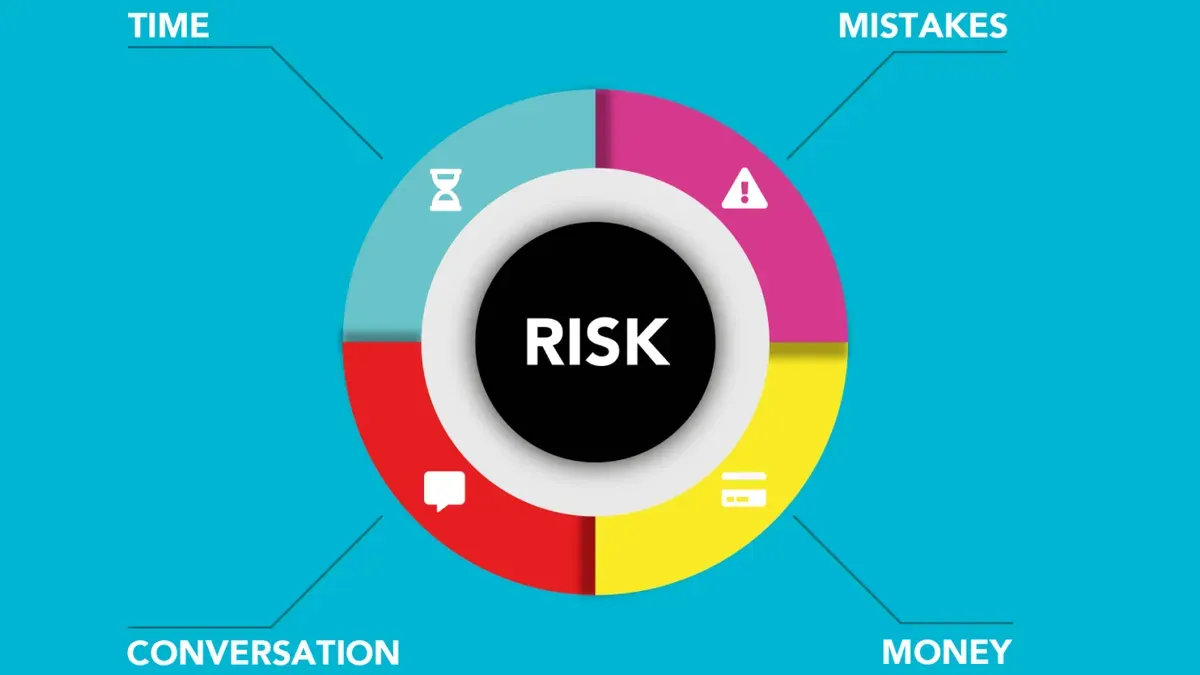
When you focus on managing steel coil inventory risks, you create a safer and more efficient storage environment. You can reduce accidents, prevent losses, and improve your operations by using the right systems and forecasting methods.
Inventory Management Systems
Inventory management systems play a key role in managing steel coil inventory risks. These systems help you track every coil, control specifications, and keep your storage organized.
Tracking Quantities and Locations
You need to know exactly how many coils you have and where each one is stored. Modern coil storage racks, such as vertical tiered racks and cantilever racks, help you address safety challenges. These racks keep coils stable and prevent movement, which lowers the risk of accidents. You can access each coil independently, which supports first-in, first-out (FIFO) inventory methods. This setup also makes auditing easier and reduces handling time, so you face fewer risks.
Tip: Use a digital inventory system to update coil locations in real time. This reduces confusion and helps you find coils quickly.
Specification Control
You must control the specifications of each steel coil to meet customer needs and maintain quality. Inventory management systems offer features that make this process simple and reliable.
| Feature | Description |
|---|---|
| Real-time tracking | Enables continuous monitoring of inventory levels and coil usage, ensuring accurate stock management. |
| Reporting capabilities | Provides detailed insights into scrap generation, machine downtime, and production efficiency. |
| Integration with ERP systems | Facilitates seamless data flow between inventory management and other business processes. |
| Preventative maintenance | Ensures machines operate at peak performance, reducing downtime and maintaining product specifications. |
| Shipment tracking | Allows for efficient logistics management, ensuring timely deliveries and accurate order fulfillment. |
These features help you keep your steel coil inventory organized and up to date. You can spot problems early and take action before they become bigger issues.
Demand Forecasting
Demand forecasting helps you predict how many steel coils you will need in the future. This step is important for managing steel coil inventory risks because it prevents both shortages and overstocking.
Market Trends Analysis
You should analyze market trends to understand how demand for steel coils changes over time. Tracking steel coil prices helps you control costs and stay profitable. Real-time data allows you to manage inventory more effectively and avoid running out of stock or having too much on hand. When you keep up with price changes, you can adjust your strategies and stay competitive.
| Benefit/Application | Description |
|---|---|
| Cost Management | Tracking steel coil pricing helps firms control expenditures and maintain profitability. |
| Supply Chain Optimization | Real-time data allows for effective inventory management, reducing the risk of stockouts or overstocking. |
| Market Competitiveness | Up-to-date price information enables organizations to quickly adjust their strategies to remain competitive. |
| Manufacturing | Monitoring steel coil prices optimizes procurement and manages production costs effectively. |
| Supply Chain Management | Using real-time data streamlines supply chain operations and manages inventory efficiently. |
Historical Sales Data
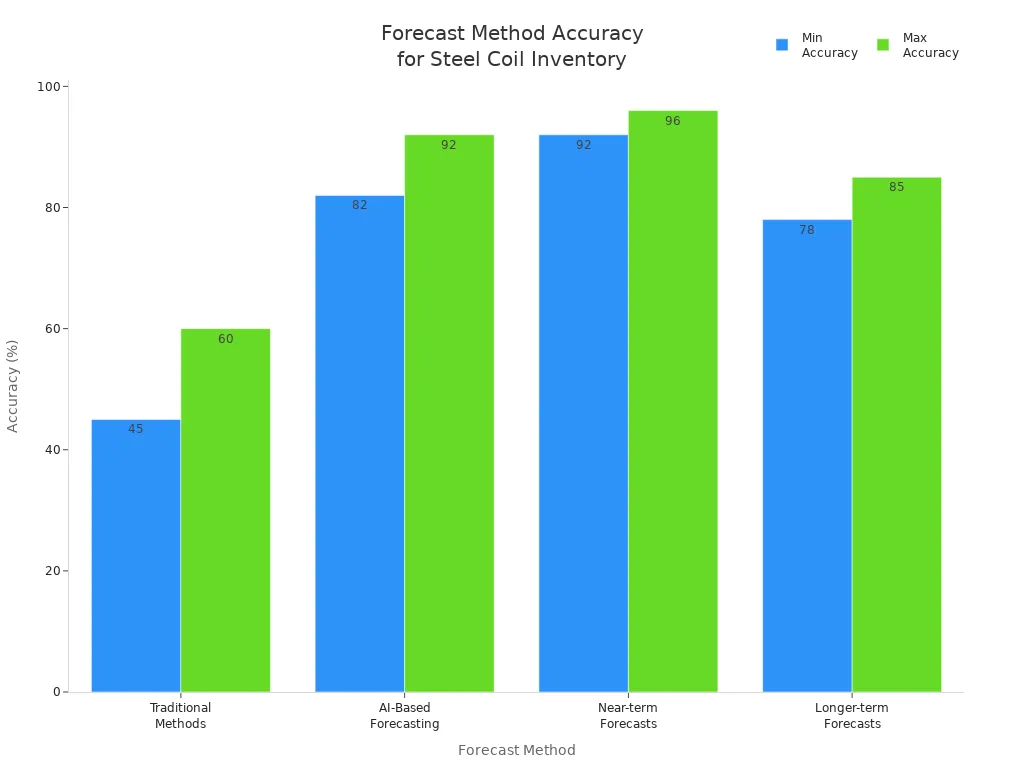
You can use historical sales data to make accurate forecasts. Traditional methods offer some accuracy, but AI-based forecasting provides much better results. Near-term forecasts are the most accurate, while longer-term forecasts are still reliable.
| Forecast Method | Accuracy Range (%) | Forecast Horizon (weeks) |
|---|---|---|
| Traditional Methods | 45–60 | 4 |
| AI-Based Forecasting | 82–92 | 4 |
| Near-term Forecasts | 92–96 | 1-2 |
| Longer-term Forecasts | 78–85 | 8-12 |
When you combine market trends and historical data, you can make smarter decisions. This approach helps you avoid costly mistakes and keeps your steel coil inventory at the right level.
By focusing on managing steel coil inventory risks with strong inventory management systems and accurate demand forecasting, you protect your materials and improve your business.
Handling and Stacking Safety
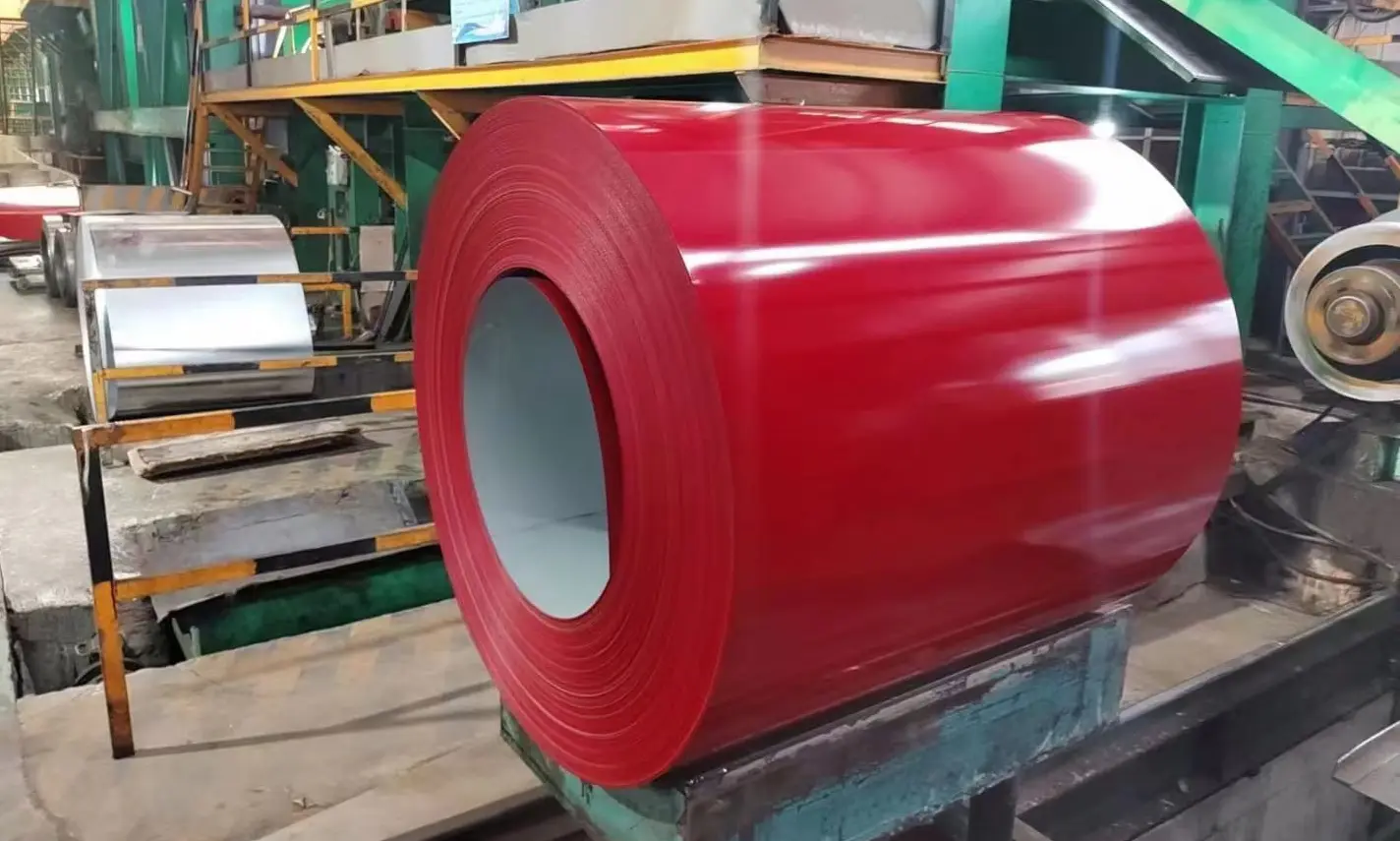
Proper handling and stacking of steel coils play a crucial role in preventing workplace injuries and protecting your inventory. You can reduce risks by following safe lifting methods, efficient stacking practices, and using the right tools to prevent coil movement.
Safe Lifting Methods
Manual Handling Precautions
Manual handling of steel coils can lead to serious injuries if you do not follow safety precautions. Always secure steel coils with restraints and tested equipment before moving them. Double-check the stability of each load. Never overload or stack coils without using approved methods. Train all operators and loaders on safe securing practices to ensure everyone understands the risks and proper procedures.
Tip: Use ergonomic lifting techniques and avoid lifting heavy coils by hand whenever possible. This reduces the chance of back strains and other injuries.
Integrated bulk handling systems offer a safer alternative to manual lifting. These systems use mechanized transport to move coils, eliminating the dangers of heavy, repetitive, or overhead lifts. Ergonomic design features position materials at optimal heights, which helps prevent common back injuries.
Equipment Use
You should use specialized equipment for lifting and handling steel coils. The right equipment not only increases efficiency but also improves safety. Here is a table showing common lifting equipment and their capacity ranges:
| Equipment Type | Capacity Range |
|---|---|
| Single girder overhead crane system | Up to 20 tons |
| Double girder overhead crane | 5 to 80 tons |
| Heavy duty open winch overhead crane | Up to 320 tons |
| Single girder gantry crane | Up to 20 tons |
| Double girder gantry crane | Up to 80 tons |
| Double girder gantry crane (box girder) | Up to 320 tons |
Always match the equipment to the weight and size of your steel coils. Regularly inspect and maintain lifting devices to avoid unexpected failures.
Efficient Stacking
Largest Diameter Coil Placement
Stacking coils efficiently helps you maximize storage space and maintain safety. Always place the largest diameter coils at the bottom of the stack. This creates a wider, more stable base and keeps the center of gravity low and balanced. If you put smaller coils at the bottom, you risk creating an unstable pyramid that can tip over.
- Placing large coils at the base increases stability.
- A low center of gravity reduces the risk of toppling.
- Avoid stacking small coils under larger ones to prevent accidents.
Use of Skids and Cradles
Before stacking, inspect skids for any damage. Only use skids that are in good condition to support the weight of the coils. Skids and cradles help distribute the load evenly and prevent coils from shifting. Always use skids and cradles designed for the specific size and weight of your coils.
Note: Limit stacks to a maximum of three for slit coils and two for master coils. This prevents collapse and makes it easier to access each coil safely.
Preventing Coil Movement
Coil Stoppers and Wedge Blocks
Preventing coil movement is essential for Managing Steel Coil Inventory Risks. You can use several methods to keep coils stable during storage:
| Method | Description | Effectiveness |
|---|---|---|
| Coil Pads and Mats | V-shaped or contoured blocks made from durable polyurethane. | Provide stable, non-marring contact surface, resist abrasion, and protect coil surfaces. |
| Coil Saddles and Cradles | Deeper cradles designed for stability and fit for various coil diameters. | Minimize risk of movement or tipping, ideal for larger coils. |
| Coil Wedges and Chocks | Modern wedges made from durable plastics or polymers. | Prevent coils from rolling, offering longer service life than wood chocks. |
| Interlocking Rail Systems | Reinforced plastic or steel rails for secure placement of modular blocks. | Ensure chocks cannot slip, providing exceptional operational flexibility. |
| Integrated Safety Features | Dedicated components like Rollstops to prevent unintended movement. | Enhance safety during loading/unloading, critical for preventing accidents. |
You should always use coil stoppers and wedge blocks to keep coils from rolling or shifting. These tools provide extra security and help you maintain a safe storage environment.
By following these handling and stacking safety practices, you reduce the risk of accidents and protect your steel coil inventory.
Storage Practices
You can create a safer steel coil storage environment by focusing on smart storage practices. These steps help you reduce accidents, protect your materials, and support your team’s safety.
Designated Storage Areas
You should always set up designated storage areas for steel coils. These areas keep your inventory organized and lower the risk of accidents. Choose spaces away from busy walkways and vehicle routes. Mark these zones clearly with signs and floor markings so everyone knows where to store and move coils.
Low-Traffic Zones
Low-traffic zones help you prevent collisions and injuries. When you keep steel coils in areas with less foot and equipment traffic, you reduce the chance of accidents. You also make it easier for workers to focus on safe handling. Here are some best practices for designated storage areas:
- Provide regular training on safe handling and emergency procedures.
- Mark safety zones and hazards with clear signage.
- Inspect racks often to check for damage or wear.
- Require all workers to wear the right personal protective equipment (PPE).
- Prepare and practice emergency response plans.
- Encourage staff to report safety concerns.
- Review safety performance and update practices often.
You should also follow OSHA and ANSI standards for steel coil storage. These rules help you keep racks strong and workers safe.
Adequate Airflow
Proper airflow in your storage area protects steel coils from moisture and corrosion. Good ventilation keeps humidity low and prevents water from building up on coil surfaces. This helps you maintain the quality and strength of your steel coils.
| Key Factor | Impact on Corrosion and Quality |
|---|---|
| Adequate Airflow | Prevents moisture intrusion, reducing corrosion rates. |
| Humidity Control | Maintains optimal conditions for steel integrity. |
| Storage Practices | Incorporates design elements that enhance airflow. |
Tip: Use fans or vents to improve airflow and check humidity levels often.
Stable Surfaces
You need stable, level surfaces for steel coil storage. Uneven floors can cause coils to shift or roll, which increases the risk of accidents. Make sure your storage area has a flat, solid base.
Leveling and Chocking
Leveling blocks and chocks keep coils from moving. Place chocks on both sides of each coil to stop rolling. Check that all blocks and chocks fit tightly and show no signs of damage. This simple step adds a strong layer of safety to your storage setup.
Vertical Rack Systems
Vertical rack systems give you a safe and efficient way to store steel coils. These racks use space wisely and keep coils organized. You can access each coil quickly, which speeds up order picking and reduces handling time. Vertical racks also lower the risk of accidents from disorganized piles. You protect your materials and make your workplace safer by using these systems.
You play a key role in Managing Steel Coil Inventory Risks when you follow these storage practices. Organized, well-ventilated, and stable storage areas help you keep your steel coils safe and your team protected.
Safety Protocols and Training
You need strong safety protocols and regular training to keep your steel coil storage area safe. These steps help you prevent injuries, reduce downtime, and create a culture of safety in your workplace.
Standard Operating Procedures
Standard operating procedures (SOPs) give you clear instructions for every task. When you follow SOPs, you lower the risk of accidents and make sure everyone knows what to do.
Written Guidelines
You should write down every step for handling, moving, and storing steel coils. Clear guidelines help your team understand the safest way to lift, transport, and store coils. Here are some key components you should include:
- Use personal protective equipment (PPE) for every handling task.
- Train employees regularly on safe handling and emergency procedures.
- Inspect storage racks and lifting equipment before each use.
Regular inspections and maintenance help you spot hazards early. This keeps your equipment in good shape and your team safe.
Emergency Plans
You must prepare for emergencies before they happen. Create easy-to-follow plans for fires, spills, or injuries. Post these plans in visible places. Practice emergency drills so everyone knows how to respond quickly and safely.
Staff Training
Training helps your team handle steel coils safely and respond to hazards. You should make training a regular part of your safety program.
Initial and Ongoing Training
Start with thorough training for every new employee. Cover safe lifting, proper use of equipment, and emergency actions. Offer refresher courses often to keep safety skills sharp. When you train your team regularly, you build good habits and reduce mistakes.
Certification Checks
Check that all workers have up-to-date certifications for operating cranes, forklifts, or other heavy equipment. Review these certifications often. Only allow trained and certified staff to handle steel coils.
PPE Standards
Personal protective equipment protects your team from sharp edges and heavy loads. You should require the following PPE for all workers handling steel coils:
- Gloves to protect hands from cuts and scrapes
- Safety glasses to shield eyes from flying debris
- Steel-toed boots to guard feet against heavy objects
- Protective clothing to prevent injuries from sharp or rough surfaces
Wearing the right PPE reduces injuries and keeps your team safe every day.
By following these safety protocols and training practices, you create a safer workplace for everyone involved in steel coil storage and handling.
Environmental Controls and Risk Assessment
You must control your storage environment to keep steel coils safe and reduce risks. Environmental controls and regular risk assessments help you prevent damage and protect your team.
Humidity and Air Quality
Proactive Controls
Moisture is one of the biggest threats to steel coils. When humidity rises, water can collect on coil surfaces. This leads to rust and weakens the steel. You can stop this by using dehumidifiers, fans, and proper ventilation. Store coils in areas with controlled temperature and humidity. Seal doors and windows to keep outside air from entering. Use moisture-absorbing materials near your coils for extra protection.
Tip: Check humidity levels every day. Set up a schedule for cleaning and maintaining your ventilation equipment.
Warehouses often use several corrosion prevention methods. These include keeping coils off the ground, using protective wraps, and applying rust inhibitors. You should combine these steps for the best results.
Real-Time Feedback
You need real-time feedback to spot problems before they grow. Install humidity and air quality sensors in your storage area. These sensors alert you if conditions change. You can act fast to fix issues and avoid coil damage. Many systems send alerts to your phone or computer. This helps you respond quickly, even when you are not on site.
Hazard Identification
You must look for hazards in your storage area every day. Regular checks help you find risks and fix them before accidents happen.
Slip, Trip, Fall Risks
Slips, trips, and falls are common in steel coil storage. Water, oil, or loose straps on the floor can cause injuries. Keep walkways clear and dry. Mark hazard zones with bright tape or paint. Train your team to report spills and clean them up right away.
Overloading Prevention
Overloading racks or storage areas can lead to collapse. You must know the weight limits for your racks and floors. Never stack coils higher than recommended. Use clear signs to show maximum load limits. Inspect racks often for signs of bending or damage.
Here is a table showing common hazards and how you can reduce them:
| Risk Area | Potential Hazard | Mitigation Strategy |
|---|---|---|
| Coil Handling | Crushing injuries, strains | Use automated systems, proper lifting, PPE, clear communication |
| Wrapping/Strapping | Lacerations, entanglement | Machine guards, training, PPE, emergency stop buttons |
| Transportation | Coil shifting, falling from forklifts | Secure coils, inspect equipment, enforce slow speeds |
| Storage | Coils rolling, rack collapse | Use proper racks, secure placement, routine inspections |
| Equipment Failure | Unintended movement, impact injuries | Regular maintenance, Lockout/Tagout, pre-shift checks |
Safety Audits
You should run safety audits on a regular schedule. Audits help you check if your controls and procedures work well. Walk through your storage area and use a checklist. Look for hazards, damaged racks, or broken equipment. Review training records and make sure everyone follows safety rules. Update your procedures when you find new risks.
Note: Ongoing training and regular audits keep your team alert and your storage area safe. Make safety a habit, not just a rule.
Technology and Automation
Modern technology gives you powerful tools to manage steel coil inventory risks. Automation, real-time tracking, and data analytics help you create a safer and more efficient storage environment.
Real-Time Inventory Tracking
You can use real-time inventory tracking systems to monitor every steel coil in your facility. These systems use sensors and software to update coil locations and conditions instantly. You always know where each coil is, which reduces confusion and saves time.
- You minimize coil surface damage during transportation.
- You reduce handling cycle times, which helps you move coils faster and safer.
- You ensure consistent coil alignment for better rolling quality.
- You achieve higher safety standards with comprehensive safety interlocks.
Automated tracking systems also use digital twins and IoT-enabled lines. These tools let you monitor coil temperature, line tension, and processing speed. You gain full transparency over your inventory and can spot issues before they become problems.
Automated Stock Rotation
Automated stock rotation helps you use your oldest coils first. This method, called FIFO (First-In, First-Out), keeps your inventory fresh and reduces waste. Automated systems track each coil’s age and location, then guide you to pick the right one. You avoid overstocking and prevent coils from sitting too long.
Tip: Automated stock rotation also reduces manual labor. You lower the risk of operator strain and injury by letting machines handle the heavy lifting.
Safety Monitoring
Safety monitoring technology protects you and your team from accidents. Sensors and alarms watch over your storage area and equipment at all times.
Sensors and Alarms
Sensors and alarms give you early warnings about potential hazards. You can install IoT sensors on cranes and storage racks to track performance and load weights. Machine learning algorithms analyze this data to spot unusual patterns. If something goes wrong, alarms alert you right away so you can act fast.
| Feature | Description |
|---|---|
| IoT Sensors | Continuously monitor crane performance metrics like motor temperature and load weight. |
| Machine Learning Algorithms | Analyze data to detect potential failures based on historical performance patterns. |
| Early Warning Signals | Notify operators of emerging issues, allowing for proactive maintenance planning. |
| Improved Safety | Reduce worker exposure to hazards and include safety features like anti-collision sensors. |
You can rely on these systems to prevent accidents and keep your workplace safe. Automated safety features, such as emergency stop systems and collision avoidance, protect both people and equipment.
Data Analytics
Data analytics helps you make smarter decisions about your steel coil inventory. You can use analytics to study how you use coils over time. This information helps you forecast future needs and plan better.
- Data analytics shows you historical usage patterns, which improves your forecasting.
- You can avoid stockouts or overstocking by planning with accurate data.
- Analytics helps you spot trends and risks in your inventory, so you can act before problems grow.
Note: When you use data analytics, you turn raw information into clear actions. You improve safety, reduce waste, and keep your operations running smoothly.
Technology and automation give you the tools to manage steel coil inventory risks with confidence. You protect your team, your materials, and your business by using these advanced systems.
Compliance and Continuous Improvement
You must follow strict rules and keep improving your steel coil storage practices. This helps you stay safe, avoid fines, and protect your business. Let’s look at the key areas you need to focus on.
Regulatory Standards
OSHA Requirements
You need to meet OSHA (Occupational Safety and Health Administration) standards for steel coil storage. OSHA sets rules to keep your workplace safe. You must:
- Keep aisles and exits clear at all times.
- Use proper lifting equipment for heavy coils.
- Train workers on safe handling and emergency actions.
- Inspect racks and storage systems regularly.
Tip: Review OSHA’s guidelines often. Rules can change, and you want to stay up to date.
Fire Codes
Fire safety is critical in steel coil storage. You must follow local fire codes to prevent accidents. These codes require you to:
- Keep fire exits open and marked.
- Store coils away from flammable materials.
- Install fire extinguishers and alarms in storage areas.
- Maintain clear access for emergency responders.
| Fire Safety Checklist | Action Needed |
|---|---|
| Fire exits marked | ✅ Yes / ⬜ No |
| Flammable items separated | ✅ Yes / ⬜ No |
| Fire extinguishers present | ✅ Yes / ⬜ No |
| Emergency access clear | ✅ Yes / ⬜ No |
Recordkeeping
Inspection Logs
You should keep detailed inspection logs. These logs help you track the condition of racks, coils, and equipment. Write down the date, what you checked, and any problems you found. Inspection logs show that you follow safety rules and help you spot trends.
Training Records
You must keep records of all staff training. List who attended, what topics you covered, and when the training took place. Training records prove that your team knows how to handle steel coils safely.
Note: Good records protect you during audits and help you plan future training.
Feedback and Updates
You should always look for ways to improve your storage practices. Ask your team for feedback after training or safety drills. Hold regular meetings to discuss what works and what needs to change. Update your procedures when you find better ways to keep coils safe.
- Encourage workers to report hazards or suggest improvements.
- Review safety data and inspection logs for patterns.
- Test new ideas and update your written guidelines.
Continuous improvement keeps your steel coil storage safe and efficient. You build a strong safety culture by staying alert and making small changes over time.
You can manage steel coil inventory risks by following these key steps:
- Use inventory management systems for accurate tracking.
- Practice safe handling and stacking methods.
- Set up designated storage areas with stable surfaces.
- Train your staff regularly and enforce PPE standards.
- Apply technology for real-time monitoring.
When you combine these strategies, you create a safer and more efficient storage environment. Start today to protect your materials and your team.
FAQ
What is the safest way to store steel coils?
You should store steel coils in designated, low-traffic areas with stable surfaces. Use vertical rack systems and chocks to prevent movement. Keep coils away from moisture and direct sunlight.
How often should you inspect steel coil storage racks?
You need to inspect storage racks at least once a week. Check for signs of damage, bending, or wear. Record your findings in an inspection log.
Why is humidity control important for steel coil storage?
Humidity causes rust and weakens steel coils. You should use dehumidifiers and monitor humidity levels daily. Proper airflow keeps your coils dry and strong.
What personal protective equipment (PPE) do you need for handling steel coils?
You must wear gloves, safety glasses, steel-toed boots, and protective clothing. PPE protects you from sharp edges and heavy loads.
How does technology help manage steel coil inventory risks?
Technology gives you real-time tracking, automated stock rotation, and safety monitoring. You can use sensors and alarms to spot hazards early and keep your inventory organized.
What should you do if you find a damaged coil?
You need to report the damage right away. Move the coil to a safe area. Record the issue in your inspection log and follow your company’s procedures for damaged materials.
How can you prevent coils from rolling or shifting?
Use coil stoppers, wedge blocks, and chocks. These tools keep coils stable and prevent accidents.
What training do workers need for steel coil storage?
Workers must complete initial and ongoing training. They need certification for equipment use and regular safety refreshers. Training helps everyone follow safe handling and emergency procedures.