PE (Polyester), SMP (Silicon Modified Polyester), HDP (High Durability Polyester), and PVDF (Polyvinylidene Fluoride) are the four primary paint systems for PPGI and PPGL steel. Each offers distinct trade-offs between cost, durability, and performance. PE provides acceptable color retention for roughly ten years in dry, low-UV environments. HDP approximately doubles that lifespan. PVDF, containing over 70% fluoropolymer resin, typically exceeds 20 years in building cycle testing. How to Choose PE depends on your project’s exposure and budget. This guide compares these coatings across weather resistance, service life, and application suitability, helping you match the right system to your environmental demands and long-term expectations.
Key Takeaways
-
PE, SMP, HDP, and PVDF are four paint systems for PPGI and PPGL steel.
-
Each coating offers different levels of cost, durability, and performance.
-
PE is economical and suits indoor or low-UV environments.
-
SMP provides better weather resistance and is ideal for moderate outdoor use.
-
HDP offers high durability and works well in industrial or polluted areas.
-
PVDF is the premium choice for coastal, high-UV, and long-lasting projects.
-
Choose a coating based on your local climate, budget, and expected lifespan.
-
Consider total cost of ownership, not just the initial price.
Understanding PPGI and PPGL Basics
What Are PPGI and PPGL?
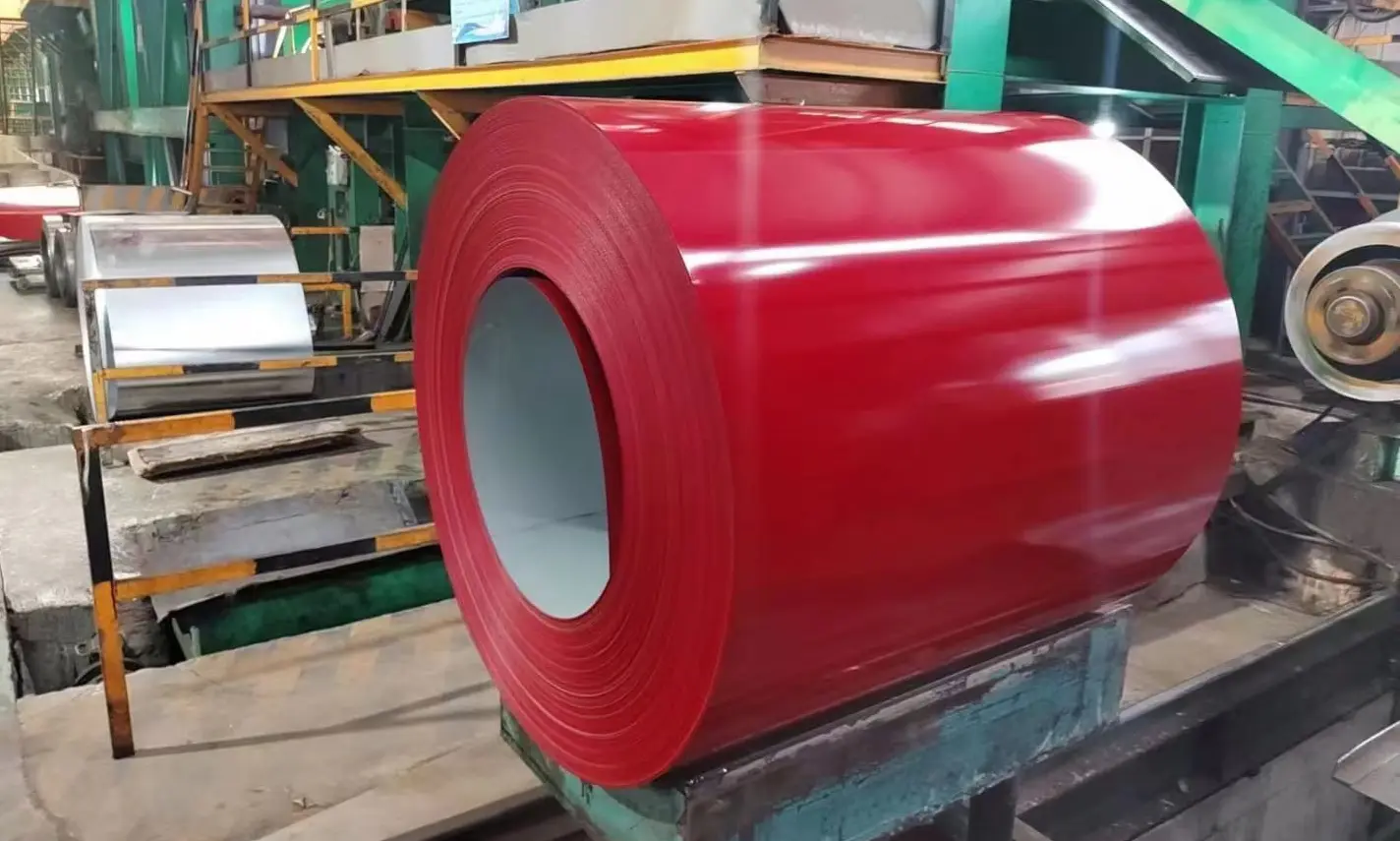
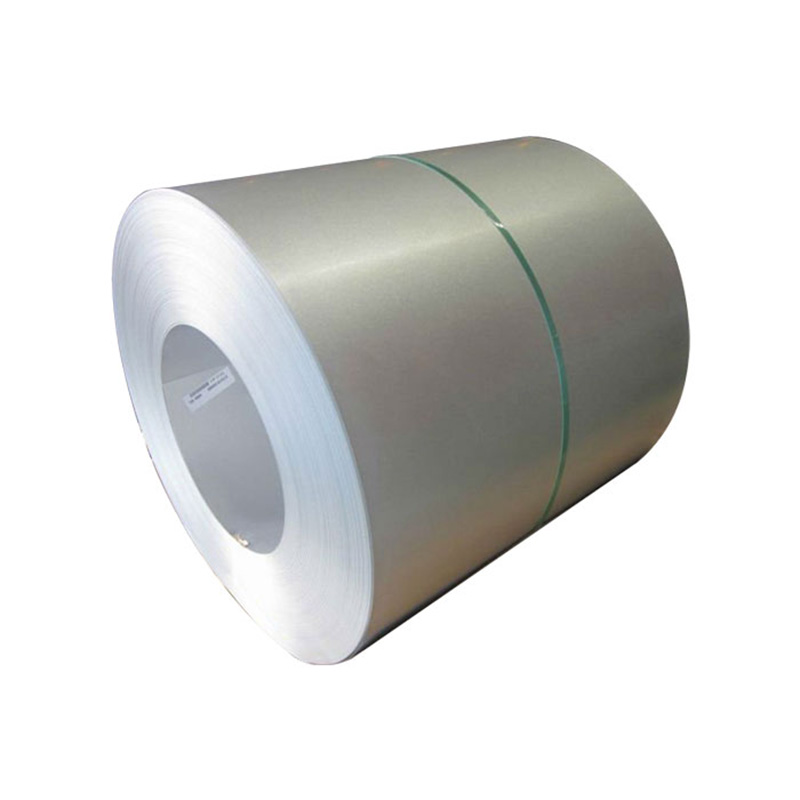
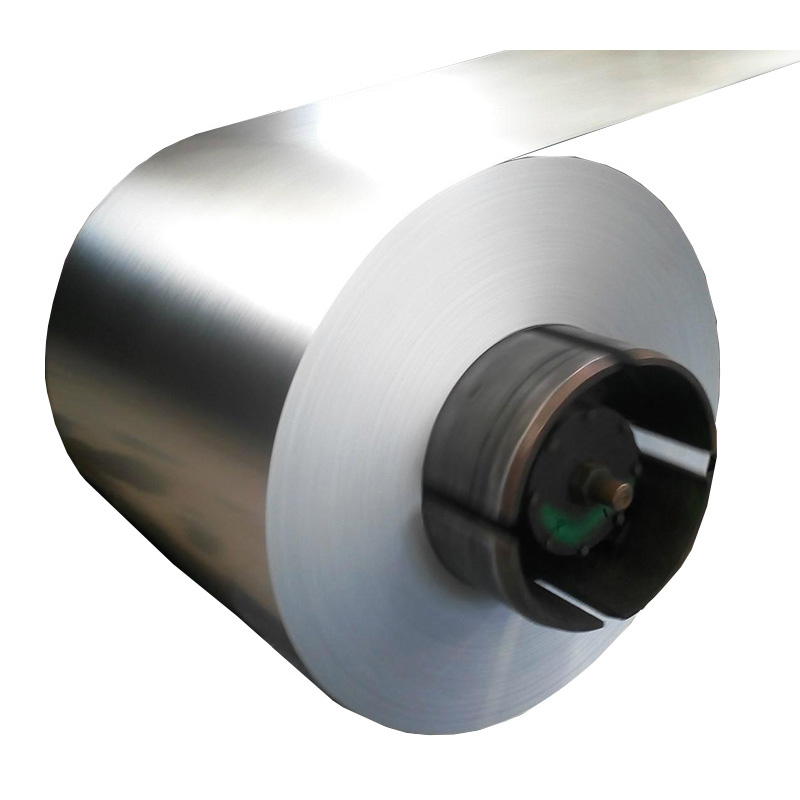
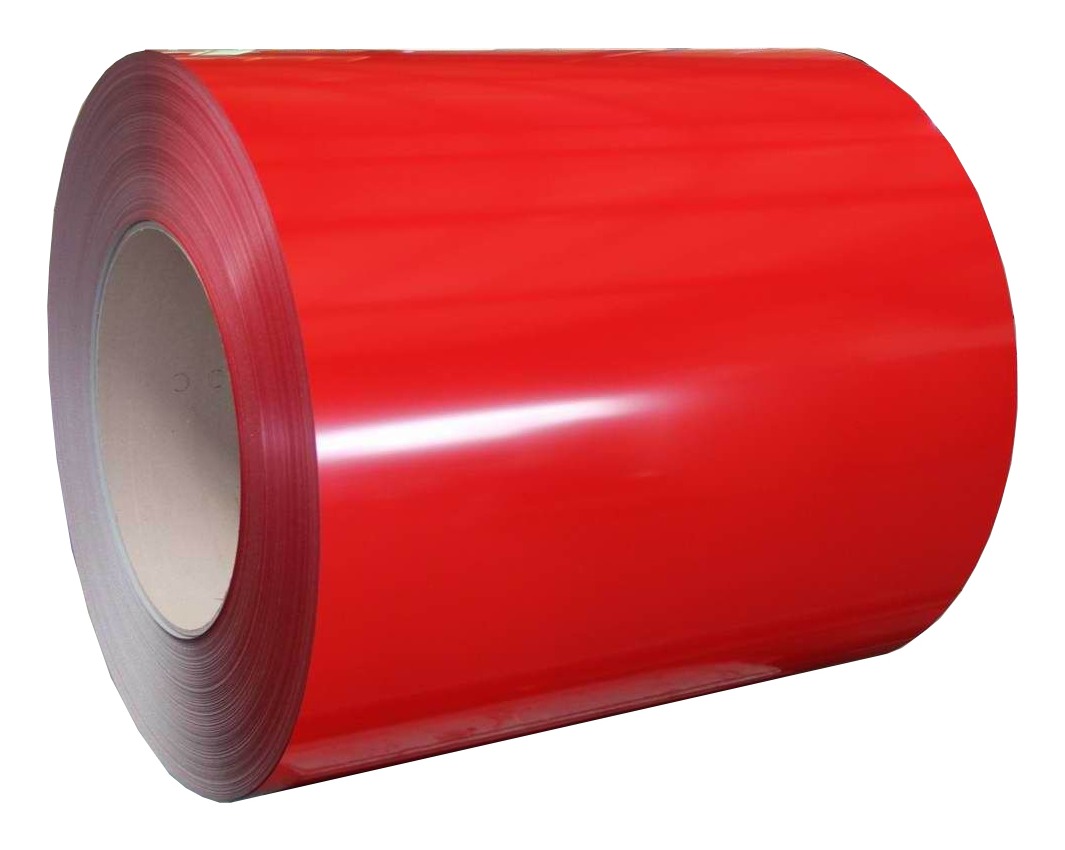
PPGI and PPGL are two families of prepainted steel. Both start as a steel coil. A metallic coating goes on first. Then a paint system goes on top. The difference between the two lies in that metallic layer, not in the paint.
Galvanized Substrate (PPGI)
PPGI uses a pure zinc coating. The zinc layer is 99.7% Zn under EN 10346, with coating weights from Z80 to Z275 g/m². This zinc provides cathodic sacrificial protection. At sheared edges and fastener holes, the zinc sacrifices itself to protect the exposed steel. For many real-world applications, this makes PPGI the superior choice.
Galvalume Substrate (PPGL)
PPGL uses a 55% Al-Zn alloy coating. Coating weights run from AZ100 to AZ150 g/m². Its microstructure combines a zinc-rich sacrificial phase with an aluminum dendrite barrier network. This structure delivers 2 to 4 times longer lifespan under acidic industrial atmospheres. PPGL offers excellent corrosion resistance in those specific environments.
Why the Paint System Matters
Both PPGI and PPGL can use the same paint systems: PE, SMP, HDP, and PVDF. The ppgi coating types do not change with the substrate. What changes is the metal underneath. A buyer selecting a ppgi prepainted steel coil must understand this distinction.
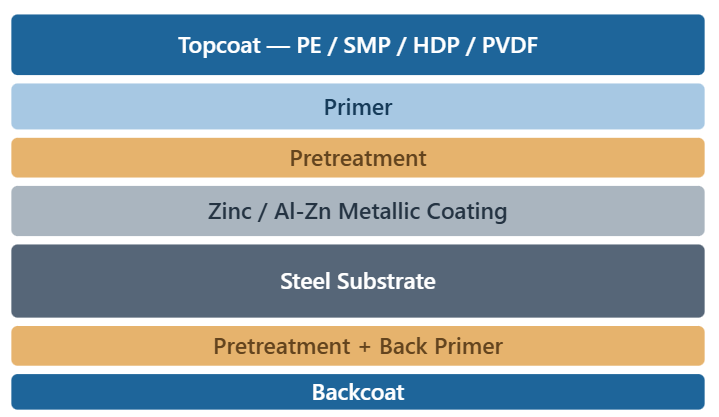
The paint system is the first line of defense against environmental factors. The metallic coating is the second. The topcoat blocks UV radiation, moisture, and chemicals. The primer and back coat add further protection. Choosing the right ppgi coating is therefore critical.
Salt spray testing shows how topcoats compare. The table below summarizes ASTM B117 results at roughly 25 µm dry film thickness.
|
Paint System (Topcoat) |
ASTM B117 Salt Spray Resistance (hours to failure, ~25 µm DFT) |
|---|---|
|
PVDF |
1,500 |
|
HDP |
1,000 |
|
PE |
720 |
Corrosivity categories under EN 10169 track with topcoat performance. PE suits RC2 and RC3 environments. HDP and SMP reach RC3 and RC4. PVDF (70/30) covers RC4 and RC5, including severe marine and heavy chemical exposure. Higher-performance topcoats correlate with higher corrosivity categories.
Salt Spray & QUV Accelerated Weathering: 500 to 1,500 hours neutral salt spray testing (ISO 9227) without blister formation.
Salt spray performance alone cannot predict UV resistance. A coating may pass salt spray yet degrade quickly under hot, sunny conditions. Accelerated corrosion testing should be paired with exterior weathering data. For pre-painted steel products, this combined view protects the investment. A ppgi coating that resists salt but fades in sunlight still fails the owner.
PE Coating: The Economical Standard
What Is PE Coating?
PE coating uses saturated polyester resin as its primary film-forming component. This resin system delivers a smooth, glossy surface at a modest cost. Manufacturers apply this topcoat to a steel coil through a continuous roll-coating process. The result is a uniform, flexible film that performs well in controlled environments.
The production sequence for PE-coated prepainted steel follows a precise path. First, the raw strip undergoes multi-stage chemical pretreatment. This includes alkaline degreasing, electrolytic cleaning, water rinsing, and a chemical conversion coating. Zirconium or chromate-free passivate ensures microscopic adhesion. Second, workers coat both sides with an epoxy or polyurethane primer. Third, the primer bakes in a multi-zone curing oven. Fourth, the high-durability topcoat and protective backer apply. Finally, the coated strip quenches rapidly in water before recoiling under tension.
This manufacturing discipline gives PE-coated ppgi its consistent quality. The primer layer bonds tightly to the metallic substrate. The topcoat then adheres to that primer. Each layer serves a distinct purpose in the overall system.
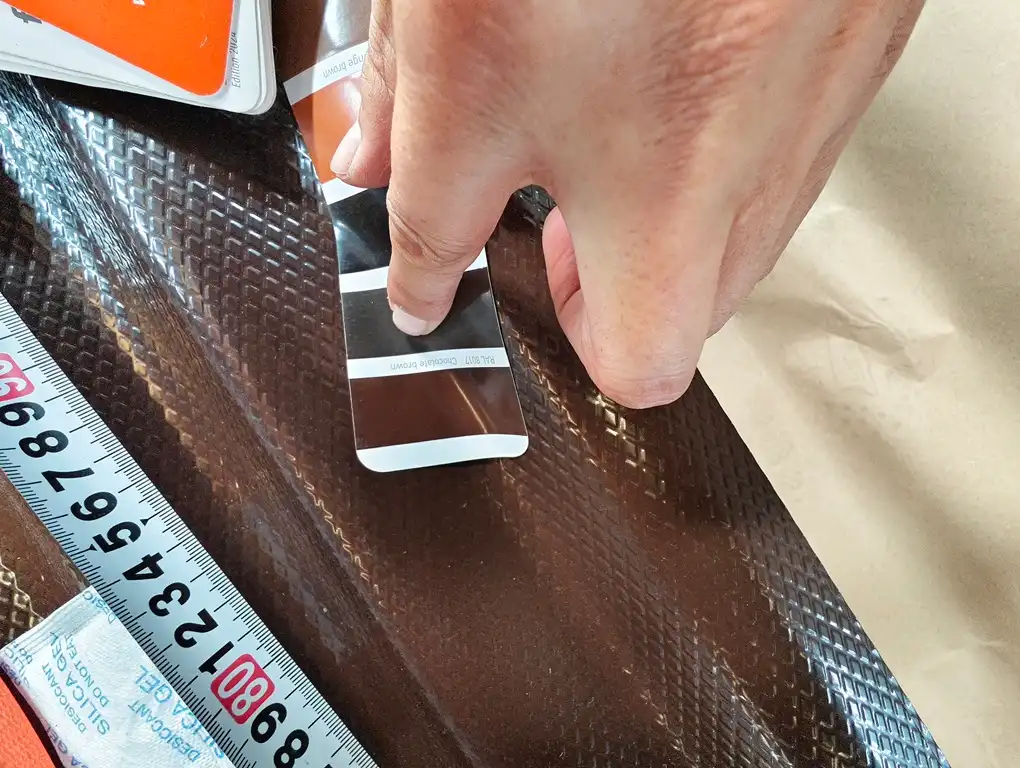
Key Properties and Performance
PE coating offers acceptable color retention for roughly ten years in dry, low-UV environments. Its weather resistance falls below SMP, HDP, and PVDF systems. The resin chemistry limits its ability to withstand prolonged sun exposure. Chalking and slight fading may appear after several years of direct sunlight.
Salt spray performance for PE reaches approximately 720 hours under ASTM B117 testing at 25 µm dry film thickness. This figure places PE at the lower end of corrosion protection. EN 10169 corrosivity categories place PE in RC2 and RC3 environments. These categories cover heated indoor spaces and unheated buildings with moderate humidity. PE does not suit aggressive marine or industrial atmospheres.
The flexibility of PE coating remains a strong asset. The thermoplastic nature of the polyester resin allows tight bending without cracking. Fabricators can roll-form and profile this material with confidence. This formability makes PE a practical choice for many architectural shapes.
Best Applications for PE
PE ppgi coating serves as the default option for interior panels. Manufacturers designate polyester for C1 and C2 environments. C1 covers heated indoor spaces with low humidity. C2 covers unheated indoor areas with moderate dryness. These conditions match PE’s performance envelope perfectly.
Indoor applications span several product categories. Home appliances use PE for refrigerator casings and washing machine casings. Furniture manufacturers specify PE for office furniture, storage cabinets, and shelving units. Industrial and commercial projects use PE for roll-up doors, louvered shutters, and sandwich panels. Each application benefits from the coating’s smooth finish and economical price point.
A PE PPGL coil carries a guaranteed service life of at least 15 years indoors. This warranty reflects the protective environment rather than exceptional coating chemistry. Buyers selecting prepainted steel for interior use gain reliable performance without premium cost. The key limitation remains clear: PE coating must avoid sustained UV exposure. Outdoor roofing and exterior cladding demand a higher-performance system.
SMP Coating: The Mid-Level Upgrade
What Is SMP Coating?
SMP coating stands for Silicon Modified Polyester. This paint system upgrades standard polyester resin by incorporating silicone intermediates into the polymer structure. According to the PPGI & PPGL Steel Coils Guide, the typical silicone modification percentage ranges from 30–50%. This chemical adjustment fundamentally changes how the coating performs under outdoor exposure.
The silicone component creates stronger molecular bonds within the film. These bonds resist breakdown from ultraviolet radiation more effectively than plain polyester. The result is a denser, harder surface that withstands chalking and fading better than PE. Manufacturers formulate SMP specifically for environments where standard polyester would fail prematurely.
The production process for SMP-coated steel coil follows similar steps to PE production. Pretreatment, primer application, and topcoat curing all occur in a continuous line. The key difference lies in the resin chemistry. The silicone-modified polyester resin requires slightly different curing parameters to achieve optimal cross-linking density.
SMP vs PE: Key Improvements
The most significant improvement of SMP over PE appears in weather resistance. Standard PE coating begins showing visible chalking after several years of direct sun exposure. SMP coating maintains its appearance substantially longer. The silicone modification provides superior resistance to UV-induced degradation.
Corrosion resistance also improves with SMP. The denser film structure creates a more effective barrier against moisture and atmospheric pollutants. This makes SMP suitable for environments that would challenge standard PE systems. The coating resists acid rain and mild industrial fallout better than its economical counterpart.
Color retention represents another key advantage. SMP holds its original shade longer than PE. The silicone resin prevents pigment breakdown from solar radiation. Buildings with SMP coating retain their aesthetic appeal for more years before repainting becomes necessary.
Flexibility does decrease slightly with silicone modification. The harder film cannot bend as tightly as pure polyester. Fabricators must account for this when roll-forming complex profiles. Most standard roofing and cladding profiles remain within SMP’s formability limits.
Ideal Use Cases for SMP
SMP coating serves as the reliable choice for standard outdoor applications. Roofing and wall cladding in moderate climates benefit from its balanced performance. The coating handles seasonal temperature swings, rain exposure, and normal UV levels without premature failure.
The EN 10169 corrosivity classification places SMP in RC3 and RC4 categories. These categories cover unheated buildings with moderate humidity and exposed industrial areas. This classification makes SMP appropriate for agricultural structures, light industrial facilities, and commercial buildings.
Cost positioning makes SMP attractive for budget-conscious projects. It costs more than PE but remains more affordable than HDP and PVDF systems. Buyers receive meaningful durability improvements without paying premium prices. This value proposition explains SMP’s popularity in mid-range construction projects.
A ppgi coating with SMP technology suits regions with distinct seasons. The coating handles temperature fluctuations without cracking or delaminating. It also performs well in areas with moderate pollution levels. For projects requiring dependable outdoor performance at reasonable cost, SMP delivers a practical balance.
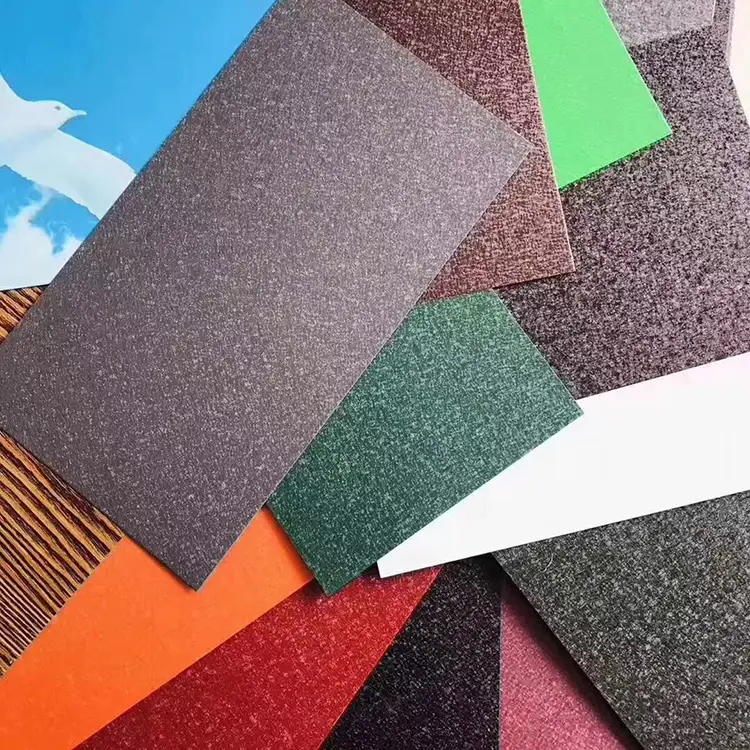
HDP Coating: The High-Performance Workhorse
What Is HDP Coating?
HDP coating stands for High Durability Polyester. This paint system represents a significant step forward from standard polyester technology. Manufacturers formulate this resin with a high-molecular-weight branched polyester structure. They crosslink this base resin with blocked isocyanate agents. This chemical architecture creates a denser, more resilient film than conventional PE systems.
High-Durability Polyester (HDP) is defined as a high-molecular-weight branched polyester resin system crosslinked with blocked isocyanate.
The production process for HDP-coated steel coil mirrors other prepainted systems. Pretreatment, primer application, and topcoat curing occur in a continuous line. The key difference lies in the curing chemistry. Blocked isocyanate crosslinkers activate at elevated temperatures. They form strong urethane bonds within the film. These bonds deliver exceptional adhesion and film cohesion.
The resulting surface resists mechanical damage and environmental attack. HDP coating maintains its integrity under conditions that would degrade standard polyester. This durability makes it a preferred specification for demanding projects.
How HDP Bridges the Gap
HDP occupies a strategic position between mid-range SMP and premium PVDF systems. It delivers performance that approaches fluoropolymer standards without the associated cost premium. This balance makes it an attractive option for specifiers who need reliable outdoor performance.
|
Coating |
UV Resistance |
Service Life |
|---|---|---|
|
SMP |
Good |
Longer |
|
HDP |
Very Good |
Long |
|
PVDF |
Excellent |
Longest |
The UV resistance of HDP coating substantially exceeds SMP performance. Its dense crosslinked structure resists photochemical degradation. Color stability remains strong over extended exposure periods. Weather aging resistance also improves noticeably compared to standard polyester systems.
For ppgi coating buyers, this performance translates into practical benefits. A building with HDP topcoat maintains its appearance longer than one with PE or SMP. The coating resists chalking and fading more effectively. This longevity reduces maintenance frequency and lifecycle costs.
The corrosion resistance of HDP also outperforms lower-tier systems. Its dense film structure blocks moisture and atmospheric pollutants more effectively. This makes it suitable for environments where standard coatings would fail prematurely.
Where HDP Excels
HDP coating proves its value in demanding environments. Industrial buildings represent a primary application category. Factories, warehouses, and processing facilities expose cladding to harsh conditions. Smoke, chemical fumes, and temperature fluctuations challenge ordinary coatings. HDP handles these stresses effectively.
Agricultural structures also benefit from HDP technology. Barns and livestock facilities face humidity, ammonia, and cleaning chemicals. The coating’s chemical resistance protects the steel substrate from degradation. This extends the service life of the entire building envelope.
|
Environment Category |
Description |
Recommended Coating for PPGL |
|---|---|---|
|
C3 |
Urban and light industrial outdoor |
HDP |
|
C4 |
Coastal and industrial |
PVDF or high-weatherability system |
|
C5 |
Severe coastal or polluted industrial |
PVDF with higher coating weight |
Areas with high humidity or pollution demand robust protection. Coastal regions expose buildings to salt-laden air. Industrial zones generate acidic precipitation and particulate fallout. HDP coating provides dependable defense in these challenging settings.
For ppgi coating selection in commercial projects, HDP offers a compelling value proposition. It costs less than PVDF while delivering most of its weather resistance benefits. This makes it suitable for office buildings, retail centers, and institutional facilities.
The formability of HDP remains adequate for standard architectural profiles. Fabricators can roll-form and bend this material without cracking. This versatility expands its application range across different building components.
PVDF Coating: The Premium Choice
What Is PVDF Coating?
PVDF coating is a fluoropolymer-based paint system. It uses polyvinylidene fluoride resin as the main film former. This chemistry separates it from all polyester-based systems. The resin content follows a strict industry specification.
PVDF coatings, with more than 70% polyvinylidene fluoride resin, deliver the longest field performance among conventional coil coating systems.
Coating Type
Resin Content Specification
PVDF 70/30
70% Kynar 500 / Hylar 5000 fluoropolymer + 30% acrylic resin
The fluoropolymer resin forms extremely strong carbon-fluorine bonds. These bonds resist breakdown from sunlight, moisture, and chemicals. The acrylic portion adds flexibility and pigment dispersion. This combination gives the pvdf coating its outstanding durability.
Superior UV Resistance and Color Retention
The carbon-fluorine bond is one of the strongest in organic chemistry. Sunlight cannot easily break it. This gives PVDF superior weatherability compared to PE, SMP, and HDP systems. A pvdf coating resists chalking and fading far longer than any polyester alternative.
Color retention is the standout benefit. Pigments stay locked in the fluoropolymer matrix. Buildings keep their original appearance for decades. This matters for architectural projects where long-term aesthetics are critical. The coating also handles salt spray well, reaching 1,500 hours under ASTM B117 testing at 25 µm dry film thickness. For a pvdf ppgi product, this means reliable performance in coastal and high-UV environments.
High-Cost Applications for PVDF
PVDF costs more than the other three systems. The fluoropolymer resin drives this premium price. Buyers pay for extended lifespan and minimal maintenance. The investment pays off in projects where repainting is expensive or impossible.
Architectural projects represent the primary application. Landmark buildings, airports, stadiums, and high-end commercial facades specify PVDF. Coastal areas with salt-laden air demand this level of protection. High-UV regions near the equator also benefit from its superior color stability. For any ppgi coating project that must look good for 20 years or more, PVDF is the clear specification. A ppgi coil with this topcoat carries the highest warranty in the prepainted steel market.
PE vs SMP vs HDP vs PVDF: Key Differences
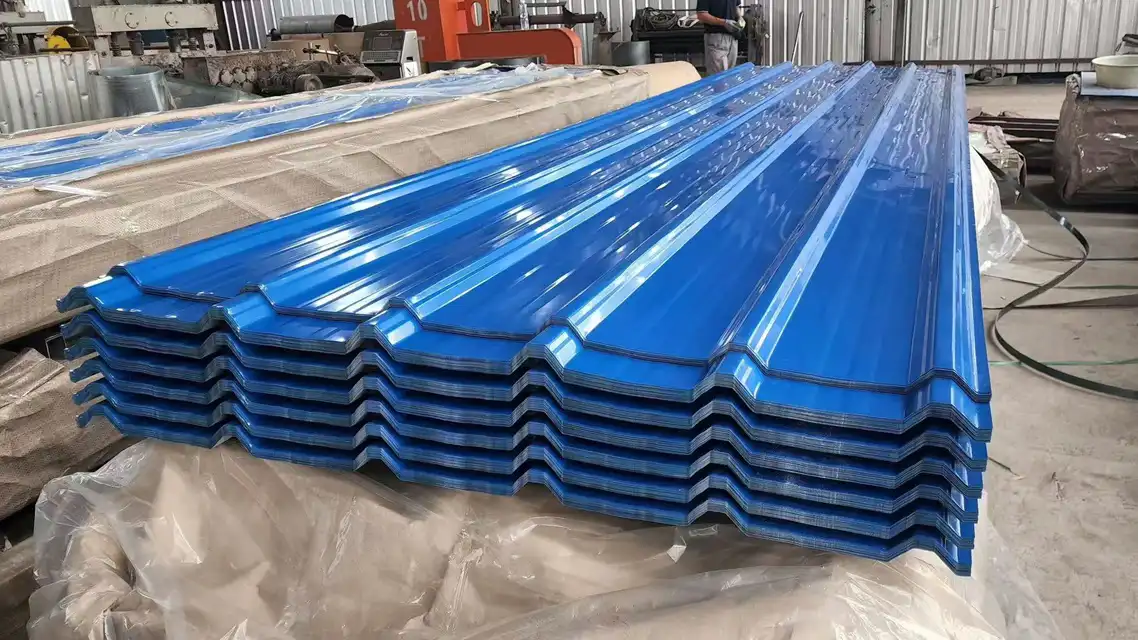
Comparing Cost and Service Life
Cost and service life sit at the heart of any coating decision. The pe vs smp vs hdp vs pvdf performance comparison reveals a clear hierarchy. PE holds the lowest price point. SMP costs more than PE but less than HDP. HDP sits in the medium-high range. PVDF commands the highest initial investment. This cost ladder mirrors the service life each system delivers. PE provides standard service life. SMP offers longer performance. HDP extends that further.
PVDF delivers the longest service life among the four. A direct performance comparison shows that buyers pay more upfront for longer replacement cycles. The pe vs smp vs hdp vs pvdf comparison therefore becomes a question of total cost of ownership. A cheap coating that needs repainting in a decade may cost more over time than a premium system that lasts two decades. This comparison matters for any ppgi coating types selection. The table below summarizes the key differences across all critical factors.
|
Performance Aspect |
PE |
SMP |
HDP |
PVDF |
|---|---|---|---|---|
|
Cost |
Lowest |
Medium |
Medium-high |
Highest |
|
Weather Resistance |
Standard |
Better |
Excellent |
Premium |
|
UV Resistance |
Basic |
Good |
Very Good |
Excellent |
|
Color Retention |
Normal |
Better |
High |
Highest |
|
Service Life |
Standard |
Longer |
Long |
Longest |
|
Typical Application |
General buildings |
Industrial buildings |
Commercial projects |
Coastal/high-end projects |
Weather Resistance and UV Performance
Weather resistance separates these four systems more than any other factor.
PE offers basic UV resistance and standard weather protection. SMP improves on this with good UV resistance and better gloss retention.
HDP pushes performance further with very good UV resistance and excellent weather aging resistance. PVDF delivers excellent UV resistance and premium weather protection. This pe vs smp vs hdp vs pvdf performance comparison shows a steady climb in capability. Color retention follows the same pattern. PE provides normal color stability. SMP offers better fade resistance. HDP maintains high color retention.
PVDF achieves the highest color retention available. For a pvdf ppgi project in a coastal or high-UV region, this superior performance justifies the premium price. The comparison also highlights application fit. PE suits general buildings with minimal sun exposure.
SMP handles industrial buildings and warehouses. HDP serves commercial projects and large public structures. PVDF excels in coastal and high-end architectural work. Each ppgi coating types option matches a specific environmental demand. A performance comparison of these coatings must weigh local climate against budget. The pe vs smp vs hdp vs pvdf comparison ultimately guides the specifier toward the right balance.
Flexibility and Formability
Flexibility and formability determine how well a coating survives fabrication. PE coating offers good processability and handles standard profiling without cracking. SMP provides adequate flexibility for most roofing and cladding profiles. HDP maintains sufficient formability for architectural shapes. PVDF delivers reliable performance in roll-forming and bending operations. This comparison of mechanical properties matters for complex building designs.
A coating that cracks during bending exposes the steel substrate to corrosion. The performance comparison across these four systems shows that all remain suitable for standard profiles. Highly complex shapes may demand a closer look at each option.
PE and SMP generally allow tighter bends than HDP and PVDF. The harder films of the premium coatings trade some flexibility for greater durability. This trade-off forms part of the overall comparison. Buyers must match formability to the intended profile. A simple wall panel imposes fewer demands than a complex architectural facade. The pe vs smp vs hdp vs pvdf comparison therefore extends beyond cost and weather resistance. It includes how each coating performs on the production line. A performance comparison that ignores formability risks fabrication failures. The right choice depends on cost, environmental exposure, required lifespan, and the physical demands of the building design.
How to Choose PE vs SMP vs HDP vs PVDF
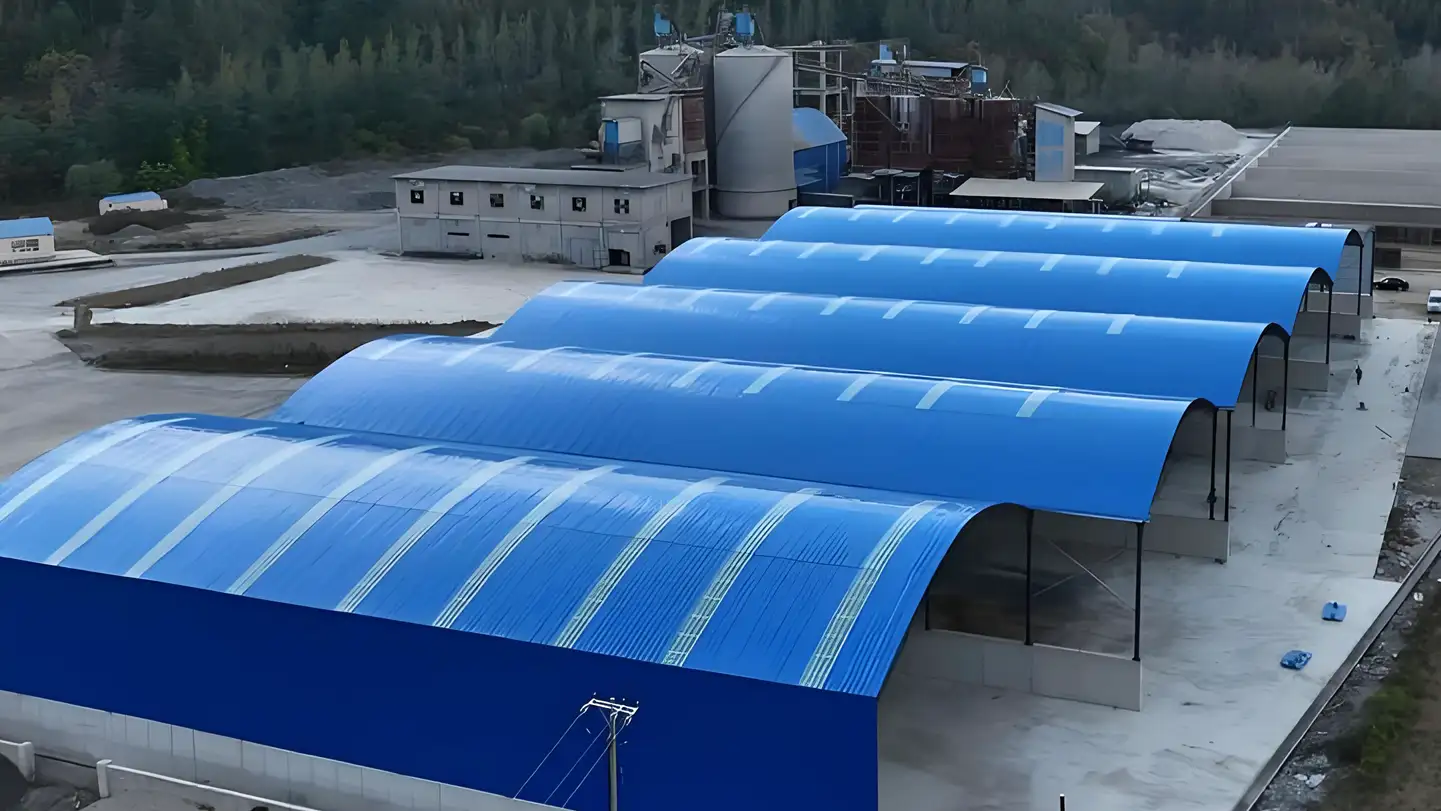
Assessing Your Local Climate
Climate drives the first decision. The ISO 9223 standard classifies atmospheric corrosivity into categories from C1 to C5. Each category maps to a recommended coating system. This framework removes guesswork from ppgi coating selection.
|
ISO 9223 Category |
Environment Description |
Recommended Prepainted Steel Coating System |
|---|---|---|
|
C1 |
Heated indoor, low humidity |
PPGI with PE |
|
C2 |
Unheated indoor, moderately dry |
PPGI with PE or HDP |
|
C3 |
Urban and light industrial outdoor |
PPGL with HDP |
|
C4 |
Coastal and industrial |
PPGL with PVDF or high-weatherability system |
|
C5 |
Severe coastal or polluted industrial |
PPGL with PVDF and higher coating weight |
Coastal and High-UV Environments
Coastal zones combine salt spray with intense sunlight. This dual attack breaks down ordinary coatings quickly. PVDF coating is the most advanced type and provides superior weatherability, color retention, and chemical resistance. It suits high-end architectural applications that demand exceptional performance and aesthetics. For maximum UV and salt spray protection, PVDF is generally the best choice. HDP coating is a strong alternative for corrosion-critical coastal environments. Its excellent corrosion resistance, adhesion, and weatherability make it well-suited for coastal regions. For C4 and C5 environments, specify the upper end of the coating weight range. PPGL is preferred over PPGI in these zones due to better cut-edge corrosion resistance.
Industrial and Polluted Areas
Industrial zones expose steel to chemical fumes, acidic precipitation, and particulate fallout. These pollutants accelerate coating degradation. HDP handles C3 environments effectively. Its dense crosslinked film blocks moisture and atmospheric pollutants. For heavier industrial exposure in C4 zones, PVDF provides the necessary chemical resistance. The choice between HDP and PVDF depends on pollution severity and project lifespan requirements. A facility expecting decades of service should invest in the premium option.
Which Coating Is Best for Roofing?
Roofing demands the highest weather resistance of any application. The roof faces direct sun, rain, temperature swings, and atmospheric fallout. PVDF is the coating is best for roofing because of its excellent UV resistance and long-term color retention. The carbon-fluorine bonds in PVDF resist breakdown from sunlight far longer than polyester-based systems. Buildings keep their original appearance for decades. This matters for architectural projects where long-term aesthetics are critical.
SMP offers a cost-effective alternative for roofing in moderate climates. It handles seasonal temperature changes and normal UV levels without premature failure. For budget-conscious projects in C3 environments, SMP delivers dependable performance. However, specifiers must weigh initial savings against future maintenance costs. A roof that needs repainting in fifteen years may cost more over time than a premium system that lasts twenty-five years or more.
Calculating Long-Term Cost vs. Initial Price
The purchase decision extends beyond the invoice price. Total cost of ownership includes initial material cost, installation, maintenance, and replacement cycles. PE holds the lowest upfront price. SMP costs more but delivers longer service life. HDP sits in the medium-high range with extended durability. PVDF commands the highest initial investment but provides the longest lifespan.
How to choose pe involves considering indoor versus outdoor use, budget constraints, and expected lifespan. For interior panels in controlled environments, PE provides reliable service at minimal cost. How to choose pe for outdoor applications requires a different calculation. The owner must estimate repainting frequency and labor costs over the building’s life. How to choose pe also depends on the cost of downtime during maintenance. A factory cannot easily pause operations for roof repairs. How to choose pe therefore becomes a question of risk tolerance and operational continuity.
The decision balances budget, durability, environment, and aesthetics. A warehouse in a mild climate may find SMP sufficient. A coastal hotel demands PVDF for guest-facing facades. An agricultural building in a polluted area needs HDP for chemical resistance. Each project has unique demands. Buyers should consult their steel supplier for specific advice. Colour coated roofing sheets perform differently across these four systems. The right specification protects the investment for decades.
Common Coating Selection Mistakes
Choosing Solely on Initial Price
A low invoice price feels like a win at the purchasing stage. That feeling fades when the coating fails years ahead of schedule. PE coating carries the lowest upfront cost among the four systems. It also delivers the shortest service life at roughly 10 years in dry, low-UV environments. HDP lasts approximately double the life of PE. PVDF exceeds 20 years in building cycle testing. A buyer who selects PE for an outdoor roof saves money today. That same buyer may pay for repainting, labor, and operational downtime within a decade.
The total cost of ownership tells a different story than the purchase order. Maintenance crews must access the roof, prepare the surface, and apply new coating. These activities disrupt building operations. A factory cannot easily pause production for roof repairs. The premium paid for HDP or PVDF often pays for itself through avoided maintenance cycles. Smart specifiers calculate cost per year of service, not cost per square meter at delivery.
Ignoring Environmental Risks
Every project site carries a unique combination of threats. Salt spray, UV intensity, and chemical exposure vary dramatically by location. A coating that performs well inland may fail rapidly on the coast. The ASTM B117 salt spray test quantifies this difference. PE reaches 720 hours to failure. HDP reaches 1,000 hours. PVDF reaches 1,500 hours. These figures translate directly into coastal performance.
Chemical resistance follows a similar hierarchy. PE offers medium resistance and suits inland general environments or short-to-medium term projects. SMP and HDP provide good resistance for mid-to-high-end construction and building exteriors with high decorative requirements. PVDF delivers excellent chemical resistance. This makes it suitable for highly corrosive environments such as coastal areas with high salt spray, chemical plants, and power plants. Specifiers who ignore these environmental factors risk premature coating failure and costly replacement.
Overlooking Primer and Back Coat
The topcoat receives most of the attention during specification. This focus misses half the protective system. The primer bonds the topcoat to the metallic substrate. A weak primer allows the entire paint system to delaminate. The back coat protects the reverse side of the coil from moisture and handling damage. Both layers contribute to overall performance.
A premium topcoat applied over an inadequate primer will not deliver its rated lifespan. The coating system functions as an integrated whole. Each layer must meet its own performance specification. Buyers should verify primer chemistry, primer thickness, and back coat quality before approving a coil order. The topcoat alone cannot compensate for weaknesses beneath it.
The choice of coating represents a direct trade-off between upfront cost and long-term performance. No universal “best” system exists. Each project demands its own evaluation of environment, budget, and expected lifespan.
PE suits budget-conscious interior applications. SMP offers a modest upgrade for standard outdoor exposure. HDP delivers balanced high-performance protection for demanding commercial environments. PVDF remains the premium specification for critical architectural projects requiring decades of flawless appearance.
Consult your steel supplier before finalizing any ppgi order. Request samples and performance data specific to your region’s climate. A qualified manufacturer will match the right coating system to your project’s unique demands, protecting your investment for years to come.
FAQ
Which coating lasts the longest?
PVDF delivers the longest service life. Building cycle testing exceeds 20 years. HDP lasts roughly double the lifespan of PE. PE provides acceptable performance for about ten years in dry, low-UV environments. SMP sits between PE and HDP in durability.
What does the 70% in PVDF 70/30 mean?
The specification refers to resin content. PVDF 70/30 contains 70% polyvinylidene fluoride resin and 30% acrylic resin. This high fluoropolymer ratio creates the strong carbon-fluorine bonds responsible for superior UV resistance and color retention.
Can PE coating be used outdoors?
PE suits indoor environments and dry, low-UV conditions. It reaches approximately 720 hours in ASTM B117 salt spray testing. EN 10169 places PE in RC2 and RC3 corrosivity categories. Outdoor roofing and exterior cladding demand a higher-performance system like HDP or PVDF.
How do I match a coating to my local climate?
Use the ISO 9223 corrosivity categories. C1 and C2 environments suit PE. C3 conditions call for HDP. Coastal C4 and severe C5 zones require PVDF or high-weatherability systems. Coastal regions also favor PPGL substrate for better cut-edge corrosion resistance.
Is the primer and back coat important?
Yes. The topcoat alone cannot protect the steel. The primer bonds the topcoat to the metallic substrate. The back coat shields the reverse side from moisture. A weak primer or thin back coat compromises the entire system, regardless of topcoat quality.
What is the difference between PPGI and PPGL?
PPGI uses a pure zinc coating with cathodic sacrificial protection. PPGL uses a 55% Al-Zn alloy that offers 2 to 4 times longer lifespan in acidic industrial atmospheres. Both substrates accept the same paint systems. The metallic layer, not the paint, determines the difference.
Which coating offers the best value?
HDP provides the most balanced value proposition. It costs less than PVDF while delivering most of its weather resistance benefits. HDP reaches 1,000 hours in salt spray testing. It suits industrial buildings, agricultural structures, and commercial projects with demanding environmental conditions.