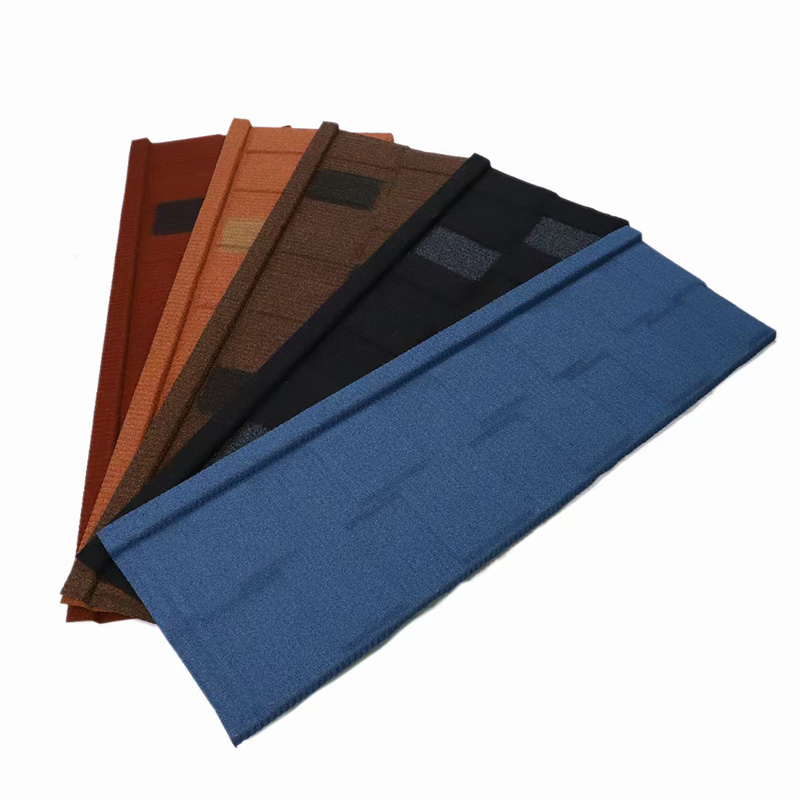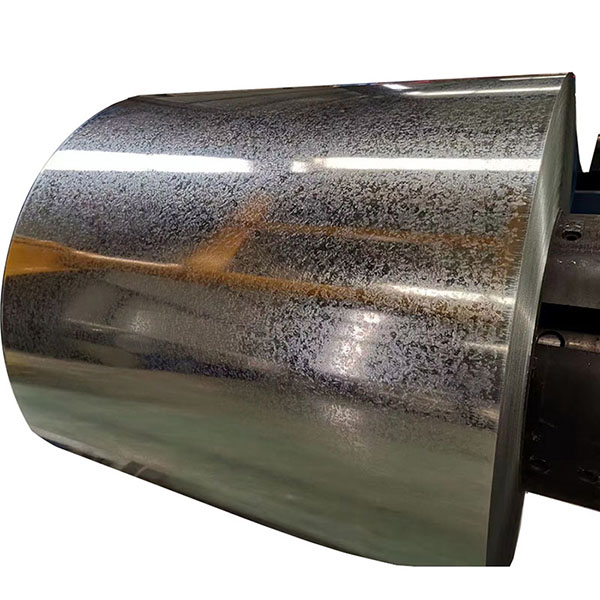
You rely on galvanized steel coil in industrial roofing when you need effective solutions for protection and performance. You can use it for roofing sheets, tiles, cladding, and key structural elements. Many builders choose this material because it resists corrosion, lasts for years, and shapes easily.
- You often see these coils as protective covers for ridges and valleys.
- You can bend them at joints to shield against weather.
- They help direct rainwater or melting snow off the roof.
Key Takeaways
- Galvanized steel coil offers strong protection against rust and weather, making it ideal for industrial roofing.
- The zinc coating on galvanized steel provides long-lasting durability, extending the roof’s lifespan to 20-50 years.
- You can shape galvanized steel coils into various forms, such as sheets and tiles, without losing their protective properties.
- Corrugated sheets made from galvanized steel are popular for their strength and ability to direct water off roofs.
- Galvanized steel coil is 100% recyclable, supporting sustainability and reducing environmental impact.
- Regular maintenance, like gentle cleaning and inspections, helps prevent rust and extends the life of your roof.
- Using galvanized steel for structural elements, like beams and columns, ensures high strength and reliability in roofing applications.
- Choosing energy-efficient galvanized steel roofing can lower cooling costs and improve your building’s energy performance.
Galvanized Steel Coil Overview
What Is Galvanized Steel Coil
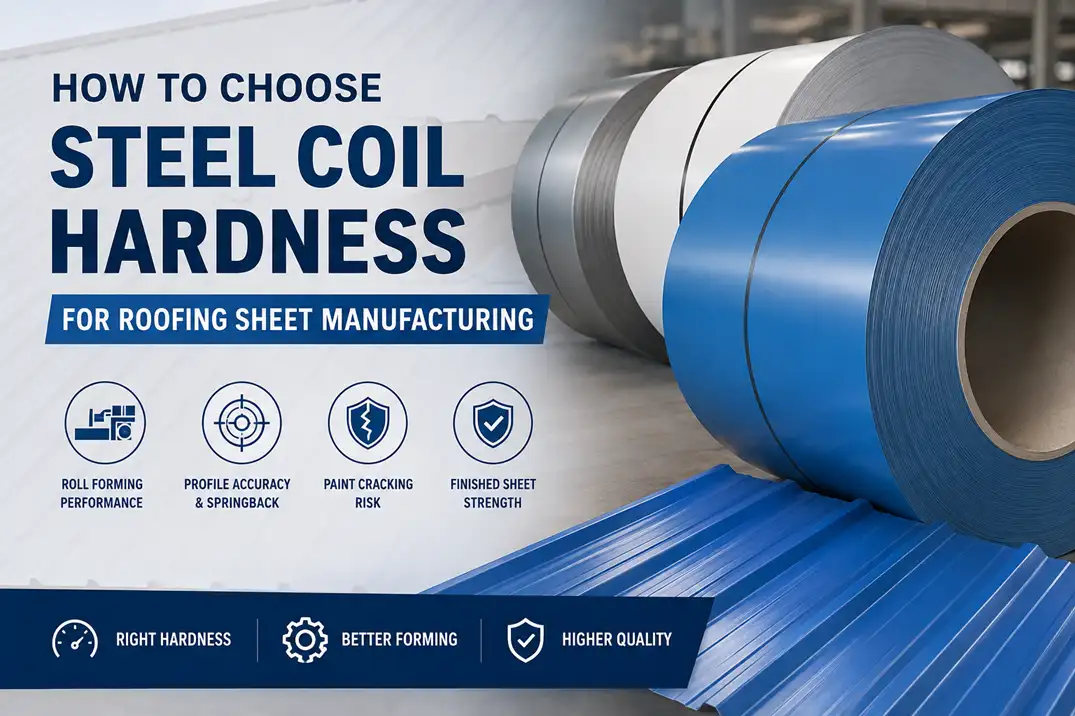
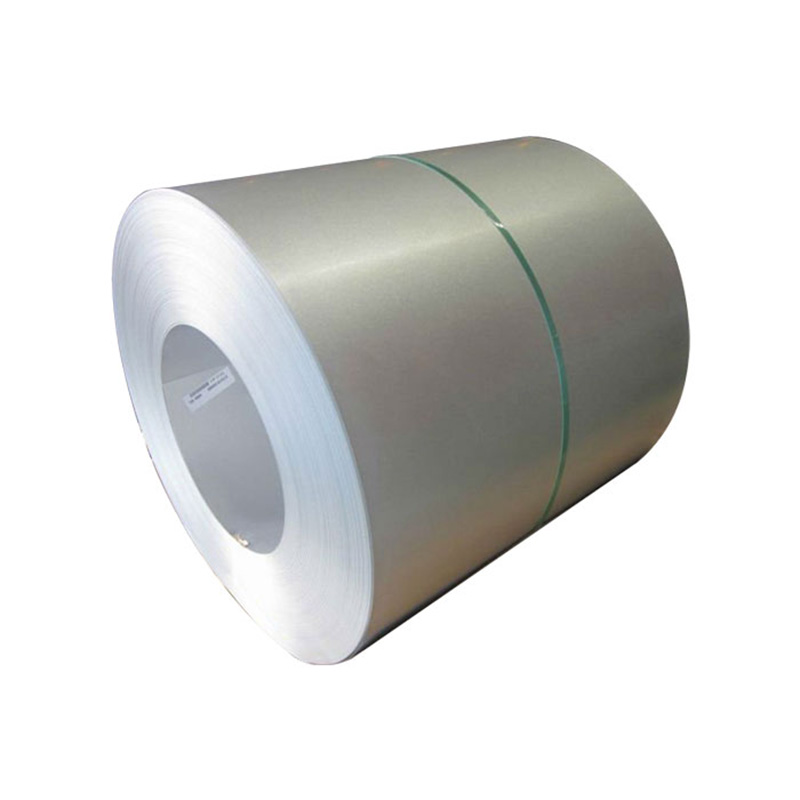
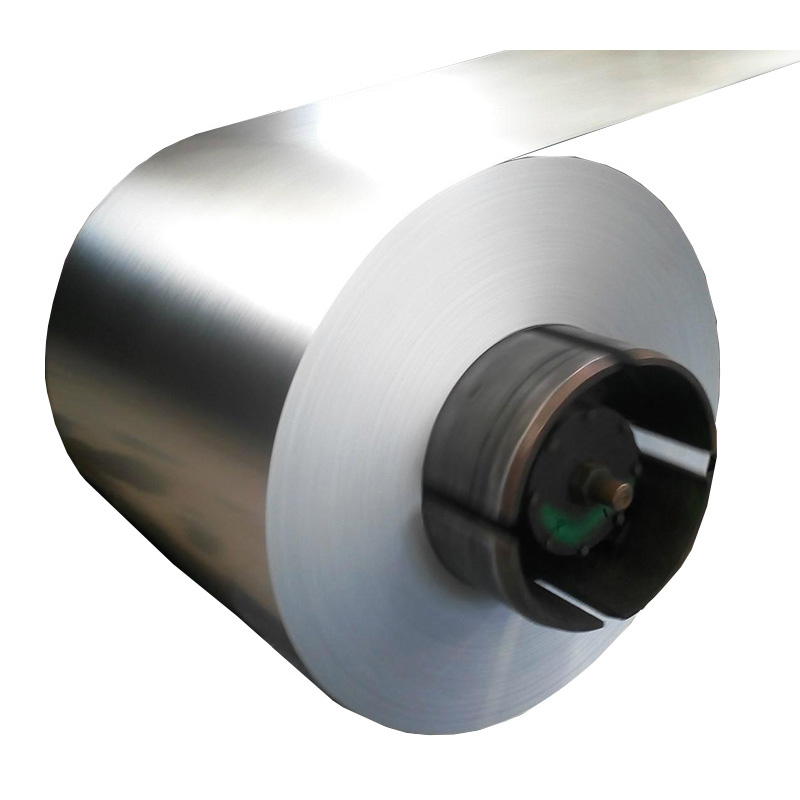
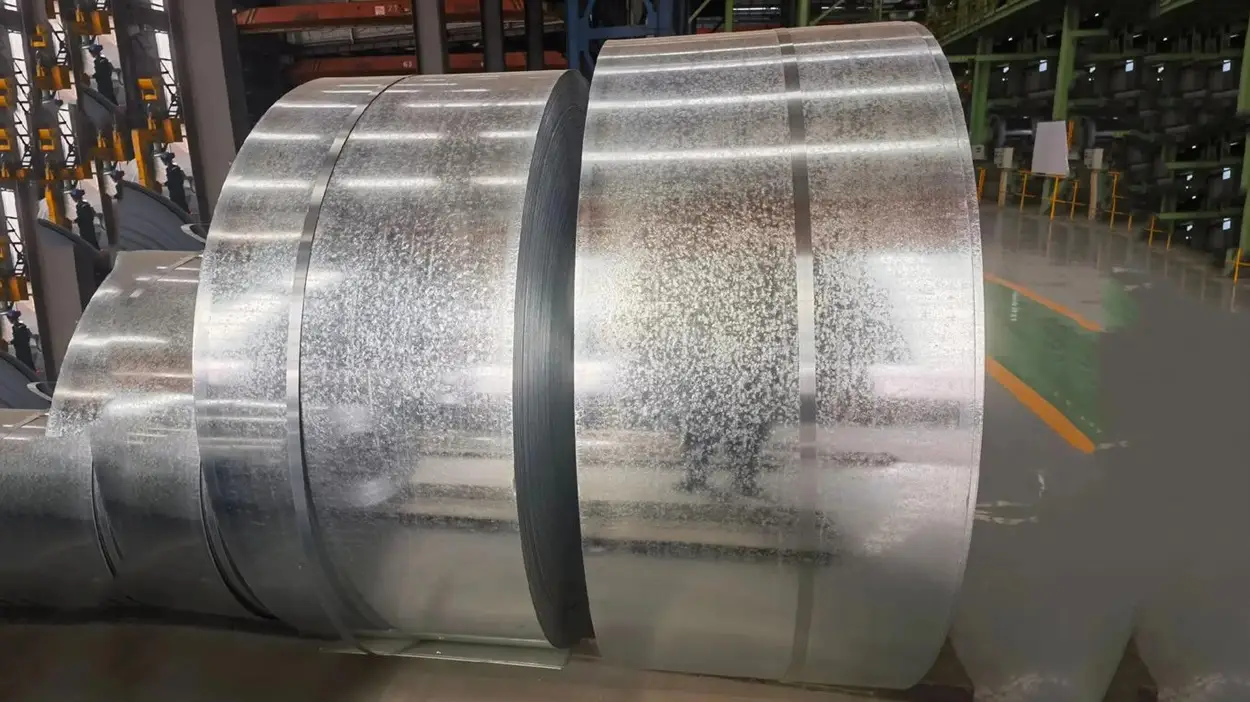
You use galvanized steel coils when you need strong and reliable roofing materials. Manufacturers produce these coils by immersing steel in molten zinc. This process creates a protective layer that shields the steel from moisture and oxygen. You often see hot-dip galvanized steel coils in industrial roofing because the zinc coating extends the lifespan of the steel. Unlike cold-rolled steel, which focuses on smooth surfaces and precise dimensions, galvanized steel coils offer superior corrosion resistance. Advanced methods, such as applying a Zn–5Al–2Mg coating, improve the protective qualities even further.
Tip: Hot-dip galvanized steel coils provide a tough barrier against rust, making them ideal for harsh environments.
You can shape galvanized steel coils into sheets, tiles, or other forms without losing their protective properties. The zinc layer remains effective even after cutting or bending the material. You benefit from the versatility and durability that these coils offer.
Key Properties for Roofing
Galvanized steel coils deliver several key properties that make them suitable for industrial roofing. You can rely on these features to ensure your roof stands up to weather and time.
- The zinc coating acts as a barrier, preventing moisture and oxygen from reaching the steel surface.
- Zinc provides sacrificial protection. If the coating gets damaged, zinc corrodes first, protecting the steel underneath.
- You can cut, bend, roll-form, stamp, and weld galvanized steel coils for many applications.
- The material adapts well to most environments because zinc stays stable in pH 6-12 conditions.
- Depending on the coating thickness and environment, galvanized steel can last 20 to 50 years or more.
- The mechanical properties ensure durability and load-bearing capability.
You may wonder how galvanized steel compares to other roofing materials. The table below shows the differences in strength, corrosion resistance, and cost:
| Material | Strength | Corrosion Resistance | Cost |
|---|---|---|---|
| Galvanized Steel | High | Moderate | Affordable |
| Aluminum | Moderate | High | Moderate |
| Stainless Steel | Very High | Very High | Expensive |
You choose hot-dip galvanized steel coils for roofing because they balance strength, durability, and affordability. You can trust these coils to protect your building and provide long-lasting performance.
Applications of Galvanized Steel Coil in Roofing
Roofing Sheets and Tiles
You see galvanized steel coil used in many roofing applications. You can choose from several types of sheets and tiles for industrial buildings. Each type offers unique benefits for durability and protection.
Corrugated Sheets
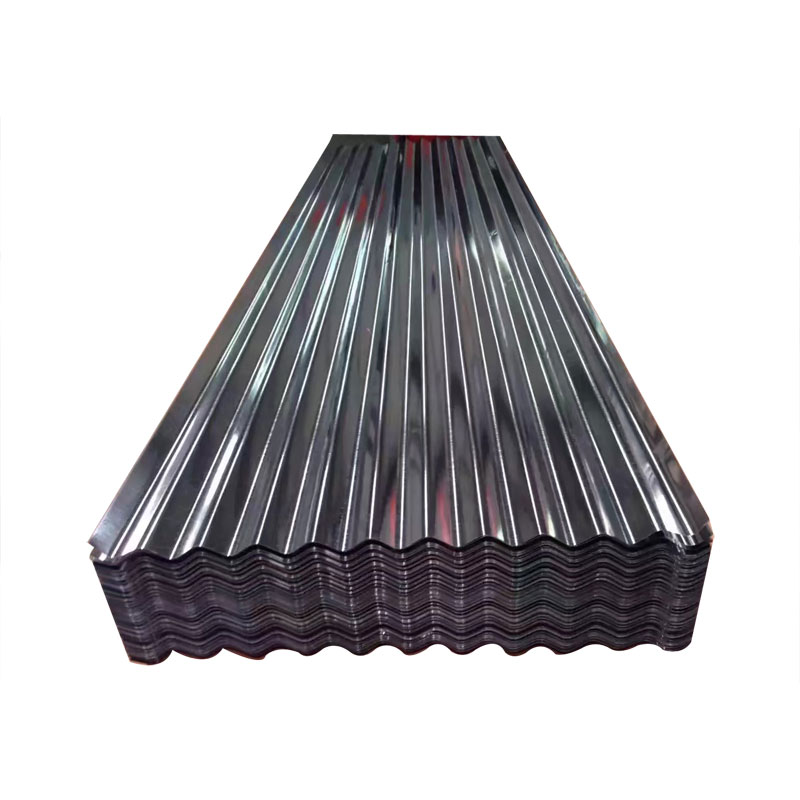
Corrugated sheets are a popular choice for industrial roofing. You use them because the wavy pattern increases strength and helps water flow off the roof. You can select from different options:
- Steel metal roof sheets: These include galvanized roof sheets that you can paint for better appearance and longer life.
- PPGI roofing sheets: Made from pre-painted galvanized iron steel, these sheets resist corrosion and work well in tough environments.
- Galvanized corrugated roof sheets: You rely on these for durability and strength against harsh weather.
Tip: Corrugated sheets made from galvanized steel coil last longer and require less maintenance than other materials.
You benefit from the zinc coating, which protects the steel from rust. You do not need to repaint or treat the surface often. This saves you time and money.
Standing Seam Tiles
Standing seam tiles give you a modern look and strong protection. You install these tiles by joining panels with raised seams. This design keeps water out and prevents leaks. You can use galvanized steel coil to create standing seam tiles that fit your building’s needs.
- You get a sleek finish and reliable performance.
- The zinc coating stops corrosion and extends the life of your roof.
- You can shape and cut the coil to match your design.
You find standing seam tiles in factories, warehouses, and other industrial buildings. They work well in places with heavy rain or snow.
Note: Galvanized steel coil lets you create custom shapes for roofing sheets and tiles. You can roll-form, stamp, or weld the material without losing its protective properties.
Cladding Systems
You use galvanized steel coil for roofing and cladding applications. Cladding systems protect the exterior walls and add strength to your building. You can choose galvanized steel coil because it offers several advantages:
- Enhanced corrosion resistance: The zinc coating gives both sacrificial and barrier protection.
- Durability: You get a longer service life compared to other materials.
- Decorative flexibility: Color-coated versions provide UV protection and let you match your building’s style.
- Cost-effectiveness: You save money by sourcing from certified exporters and using quick roll-forming methods.
You can install cladding panels quickly. This reduces labor costs and speeds up your project. You also get reliable protection against weather and damage.
Callout: Galvanized steel coil is ideal for cladding systems in industrial settings. You get strong, lightweight panels that resist corrosion and last for decades.
Structural Elements
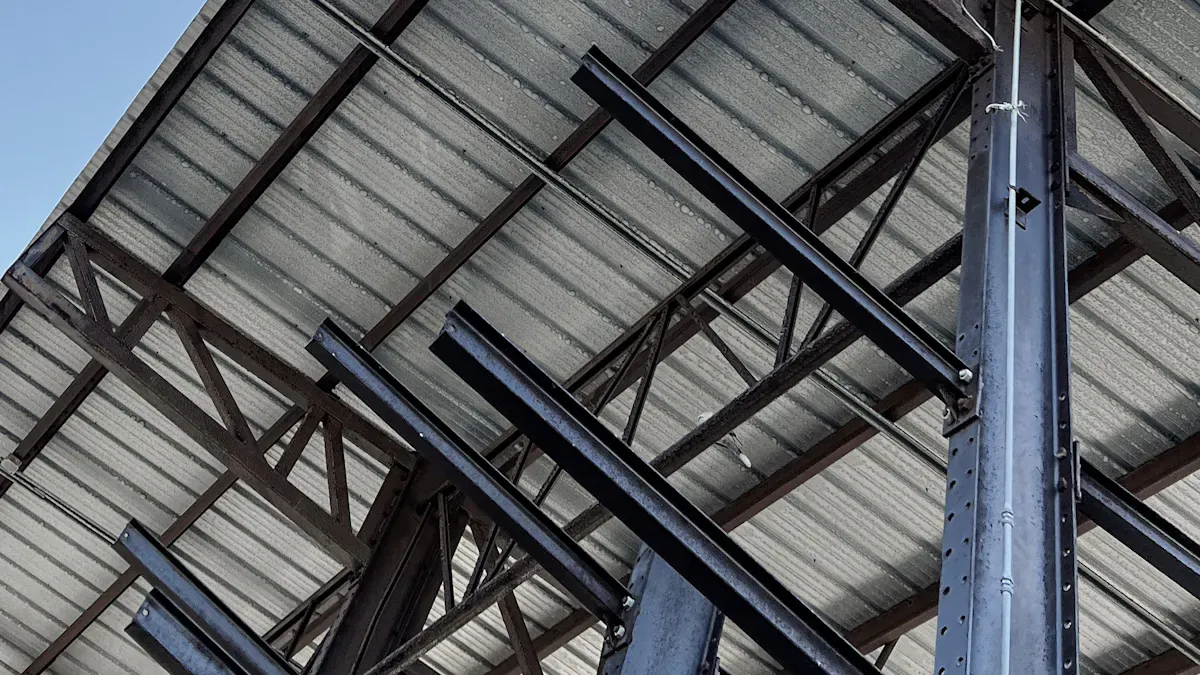
You use galvanized steel coil to build structural elements in industrial roofing. These elements support the roof and keep your building safe.
Beams
Beams made from galvanized steel coil provide high strength and weldability. You use them in building frames, roof trusses, and other load-bearing structures. You can rely on structural grade steel for heavy-duty applications.
| Structural Element | Description |
|---|---|
| Roofing Panels | Used for covering roofs in industrial buildings. |
| Structural Frames | Forms the framework for buildings and structures. |
| Purlins | Supports roofing systems in industrial settings. |
You benefit from the optimized strength-to-weight ratio. This lets you build large-span roofs and seismic structures without adding extra weight.
Columns
Columns support the roof and walls of your building. You use galvanized steel coil to make columns that resist corrosion and mechanical damage. You can weld and shape the coil to fit your design.
- You get strong, lightweight columns that last for years.
- The zinc coating protects against rust and abrasion.
- You can use columns in factories, warehouses, and outdoor facilities.
Note: You can use galvanized steel coil for beams, columns, purlins, and other structural elements. This gives you flexibility and reliability in industrial roofing applications.
You see applications of galvanized steel coil in every part of industrial roofing. You use it for roofing sheets, tiles, cladding systems, and structural elements. You get long-lasting protection, easy processing, and cost savings. You can trust galvanized steel coil to meet your roofing and cladding applications needs.
Galvanized Steel Coil in Industrial Roofing
Strength and Performance
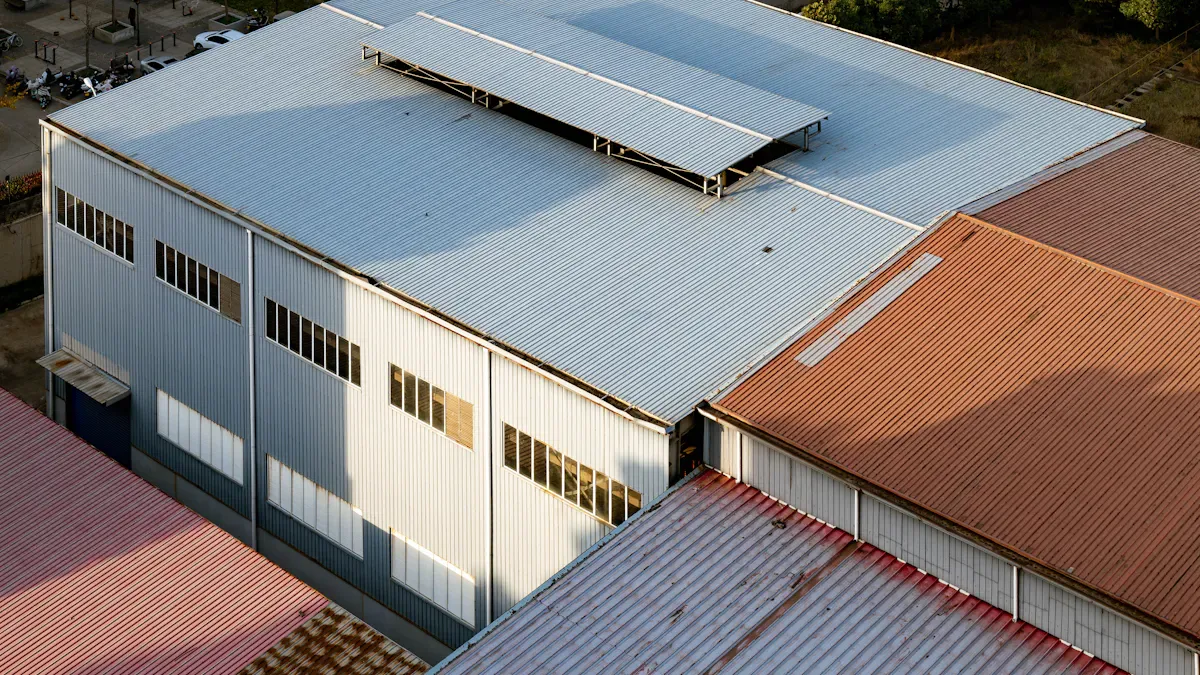
When you choose galvanized steel coil used for industrial roofing, you get strong and reliable protection for your building. The steel keeps its mechanical strength, so you can use it for structural parts like beams and frames. This strength helps your roof handle heavy loads, wind, and even snow. You can see the main performance metrics in the table below:
| Metric | Description |
|---|---|
| Mechanical Strength | Retains the strength of base steel, suitable for structural components. |
| Ductility | Allows for stretching and bending without breaking, important for shaping. |
| Corrosion Resistance | Zinc coating protects against moisture and corrosive agents, ensuring durability. |
You can stretch and bend galvanized steel coil used for industrial roofing without breaking it. Ductility lets you shape the material for different roof designs. The steel can stretch up to 50% before it fails, which is important when you need to form or bend it during installation.
The strength and structural integrity of galvanized steel coil used for industrial roofing help your roof stay safe and stable, even under stress.
Durability and Corrosion Resistance
You want your roof to last for years, even in tough environments. Galvanized steel coil used for industrial roofing gives you that durability. The zinc coating acts as a shield, protecting the steel from rust and weather damage. You can see how different coatings perform in the table below:
| Coating Type | Time to First Red Rust | Corrosion Resistance Multiplier (vs. GI) |
|---|---|---|
| Galvanized (GI) | 500 – 1,500 hours | 1.0 (Baseline) |
| Galvalume (GL) | 2,000 – 3,000 hours | 2 – 6 times |
| Zn-Al-Mg (ZAM, 3% Mg) | 5,000 – 8,000 hours | 5 – 10 times |
| Zn-Al-Mg (High Mg, 6%) | > 8,000 hours | 10 – 20 times |
You can trust galvanized steel coil used for industrial roofing to last between 20 to 50 years, depending on your environment. The zinc coating gives cathodic protection, so even if the surface gets scratched, the steel underneath stays safe. The coating covers the whole surface, so you do not have weak spots that could rust. You also save money because you do not need to replace or repair your roof as often.
- Galvanized steel coil used for industrial roofing stands up to harsh weather.
- It outlasts painted steel and aluminum in tough industrial settings.
- Stainless steel lasts long but costs much more than galvanized steel.
In seaside areas, advanced coatings like ZAM™ can keep your roof rust-free for months, even when other materials show damage.
Processing and Design Flexibility
You can shape galvanized steel coil used for industrial roofing in many ways. The production process lets you customize the coil for your project. Here is how manufacturers prepare the coil:
- Uncoil and weld the steel for continuous production.
- Clean the strip to remove dirt and oil.
- Heat the strip in an annealing furnace to improve strength.
- Dip the strip in molten zinc for coating.
- Use air jets to control the thickness of the zinc layer.
- Cool and roll the strip for a smooth finish.
- Treat the surface to prevent rust.
- Coil the finished product for delivery.
You can cut, bend, or roll-form galvanized steel coil used for industrial roofing to fit any design. This flexibility helps you create roofs with different shapes, slopes, and styles. You can also choose color-coated options to match your building’s look.
You get a material that is easy to work with and strong enough for any industrial roofing project.
Installation and Maintenance
Best Practices
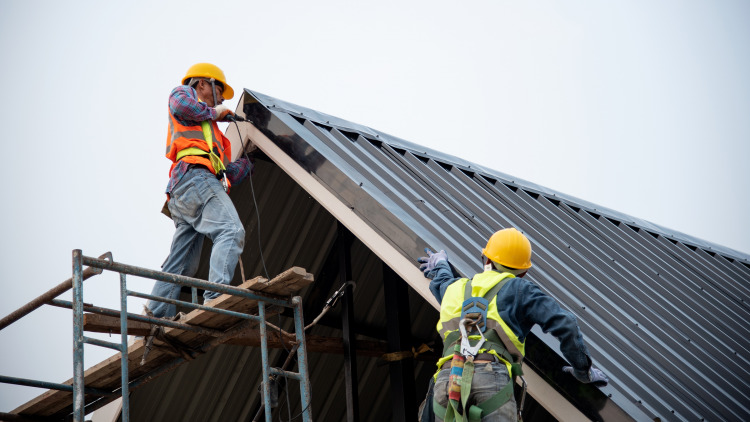
You can achieve the best results with galvanized steel coil roofing by following proven installation steps. These practices help you avoid damage and ensure your roof lasts for decades:
- Install the roofing as soon as possible to reduce storage time.
- Wear cut-resistant gloves when handling sharp or heavy sheets.
- Lift sheets instead of sliding them to prevent scratches.
- Store sheets in a cool, dry, and well-ventilated place, away from chemicals.
- Keep the product dry and off the ground to allow water to drain.
- If you must store sheets outside, cover them with high-quality materials to block moisture.
- Do not let sheets get wet. Wet sheets can cause paint to bubble and rust to form.
- Lay sheets toward the prevailing weather for the best weather protection.
Tip: Careful handling and immediate installation protect the zinc coating and keep your roof looking new.
Maintenance Tips
You can extend the life of your galvanized steel coil roof with regular maintenance. Simple routines help you avoid costly repairs and keep your roof strong:
- Start with gentle cleaning methods. Use soft cloths or nylon brushes.
- Avoid harsh or frequent abrasive cleaning. This protects the zinc coating.
- Rinse the roof with clean water after cleaning. Dry the surface to prevent standing water.
- Schedule routine inspections to catch problems early.
- Use stainless or galvanized fasteners for repairs.
- Maintain the ideal pH range (6–12) to slow down corrosion.
- Rinse sheltered areas with freshwater to remove salts and pollutants, especially in coastal or industrial zones.
- Choose a Z180 or Z275 coating and a minimum thickness of 0.4–0.5mm for structural roofing.
Note: Regular maintenance helps you prevent rust, corrosion, and other common issues.
Common Challenges
You may face some challenges during installation and maintenance. Knowing these issues helps you take action before they become serious problems.
| Challenge | Description | Solution/Prevention |
|---|---|---|
| Fastener issues | Fasteners can loosen from temperature changes and building movement. | Use corrosion-resistant fasteners and inspect them regularly. |
| Thermal expansion | Metal expands and contracts, causing warping or loose fasteners. | Use standing seam systems with floating clips and allow for expansion. |
| Installation errors | Incorrect installation reduces performance and lifespan. | Hire certified contractors and follow manufacturer guidelines. |
| Maintenance neglect | Skipping maintenance leads to costly repairs and shortens roof life. | Clean gutters, inspect components, and schedule annual inspections. |
| Corrosion | Improper coating or trapped water causes rust. | Ensure proper coating and keep panels dry and well-ventilated. |
| Scuffing & Scratching | Handling or environmental factors damage the surface. | Handle sheets carefully and repair damage quickly. |
| Underside corrosion | Water trapped under panels weakens the metal. | Allow for drainage and check for trapped moisture during inspections. |
Callout: You can avoid most problems with careful installation, regular checks, and quick repairs.
By following these best practices and maintenance tips, you keep your galvanized steel coil roof strong and reliable for many years.
Environmental and Sustainability Aspects
Recyclability
You help the environment when you choose galvanized steel coil for industrial roofing. This material stands out because you can recycle it completely. After your roof reaches the end of its life, you do not need to send it to a landfill. Instead, you can recycle the steel and use it in new products. This process saves natural resources and reduces waste.
- Galvanized steel coil is 100% recyclable. You can melt it down and reuse it without losing quality.
- Other metal roofing materials, like aluminum and copper, also offer full recyclability.
- Asphalt shingles can be recycled, but you see fewer recycling programs for them.
- EPDM rubber roofing is recyclable, but the process is not as common or straightforward as with metals.
You make a smart choice for sustainability when you select galvanized steel coil. You support a circular economy, where materials get reused instead of discarded. This approach helps you lower your building’s environmental impact.
Tip: When you recycle your old galvanized steel roof, you help reduce the demand for new raw materials and cut down on energy use in manufacturing.
Energy Efficiency
You can improve your building’s energy performance with galvanized steel coil roofing. The reflective surface of galvanized steel bounces sunlight away from your roof. This means your building absorbs less heat during hot weather. As a result, you spend less on cooling and use less electricity.
- Reflective galvanized roofing reduces heat absorption. You keep your building cooler and lower your energy bills.
- The long lifespan of galvanized steel coil means you replace your roof less often. This reduces the need for new materials and saves energy over time.
You can look for roofing products with energy efficiency certifications. For example, ENERGY STAR® labels show you which roofing materials meet strict government standards for saving energy. The Cool Roof Rating Council (CRRC) also rates and certifies roofing products based on how well they reflect sunlight and release heat.
- ENERGY STAR certification means your galvanized steel coil roof meets energy-saving standards.
- The CRRC Product Rating Program gives you independent information about a roof’s radiative properties.
- Many galvanized steel coil roofs comply with EPA requirements for energy conservation and cool roof design.
Note: By choosing certified galvanized steel coil roofing, you help your building stay cooler, save money, and support a healthier planet.
You see that galvanized steel coil offers both recyclability and energy efficiency. These features make it a responsible and practical choice for industrial roofing.
You see galvanized steel coil used in roofing sheets, cladding, and structural supports across many industries. The benefits of galvanized steel coil include long-lasting durability and strong corrosion resistance. You save on maintenance and enjoy reliable performance.
The protective zinc coating helps to strengthen the steel, making it more durable and resilient to wear and tear.
| Application | Key Advantage |
|---|---|
| Infrastructure | Lower repainting and upkeep costs |
| Warehouses | Fewer inspections needed |
| Food Processing Plants | Lower total ownership cost |
You can trust galvanized steel coil for your next industrial roofing project.
FAQ
What is the main benefit of using galvanized steel coil for industrial roofing?
You get strong protection against rust and weather. The zinc coating helps your roof last longer and reduces the need for repairs.
Can you paint galvanized steel coil roofing?
Yes, you can paint it. Make sure you use paint made for metal surfaces. Painting adds color and gives extra protection from the sun.
How long does galvanized steel coil roofing last?
You can expect your roof to last 20 to 50 years. The lifespan depends on the thickness of the coating and the local environment.
Is galvanized steel coil roofing suitable for all climates?
You can use it in most climates. It works well in areas with rain, snow, or sun. In coastal areas, you may need a thicker or special coating.
How do you maintain a galvanized steel coil roof?
You should clean the roof with water and a soft brush. Check for scratches or damage. Fix any problems quickly to keep the roof strong.
Can you recycle galvanized steel coil roofing?
Yes, you can recycle it completely. Recycling saves resources and helps the environment. Many recycling centers accept steel roofing.
What types of buildings use galvanized steel coil roofing?
You see it on warehouses, factories, and storage buildings. It also works for food processing plants and other industrial sites.
Does galvanized steel coil roofing require special installation tools?
You can use standard metal roofing tools. Wear gloves for safety. Follow the manufacturer’s instructions for best results.